The World's Cultures, Explained
Traditions, languages, heritage and living practice — documented with sources and review dates.

Guaraní
Guaraní is an indigenous language that has become a living national language of Paraguay, spoken widely across society and recognised as official alongside Spanish. Unlike many indigenous languages that survived only in marginalised communities, Guaraní became embedded across social groups, including people of mixed and non-indigenous ancestry. Its constitutional recognition gives it a formal place in national identity. The case challenges the assumption that nation-building always requires replacing indigenous languages, and shows that an indigenous language can become part of the shared culture of a modern state.

Ghanaian Highlife
Highlife is a Ghanaian musical tradition that emerged in the early 20th century, blending African rhythms with Western instruments and Caribbean influences. It became a soundtrack of urban coastal life and of Ghanaian independence, and later influenced genres across West Africa. Highlife transmits language, dance and social memory, and its evolution into hiplife and afrobeats shows how a musical tradition can renew itself across generations. It illustrates how popular music can be a primary vehicle for cultural continuity and national identity.
Nigerian Nollywood
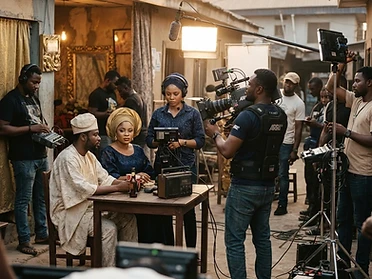
Nollywood is Nigeria's prolific film industry, one of the largest in the world by output, producing thousands of films each year in English, Yoruba, Hausa, Igbo and other languages. It emerged from local enterprise and has become a major cultural export across Africa and the diaspora. Nollywood transmits language, social commentary and storytelling at scale, and illustrates how a contemporary creative industry can become a vehicle for cultural continuity and national visibility without heavy state investment.
Andean Textile Traditions
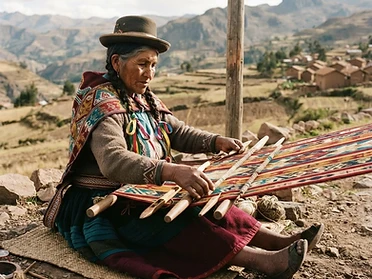
Andean textile traditions encompass the weaving, spinning and dyeing practices of the indigenous peoples of the Andes, from Bolivia and Peru to Ecuador. Textiles carry identity, cosmology and social structure through patterns, colours and techniques passed down across generations. Weaving is both an economic activity and a system of meaning. The continuity of Andean textiles demonstrates how a craft tradition can preserve indigenous knowledge and community organisation while engaging with contemporary markets, and how material culture can carry memory as effectively as writing.
Māori Cultural Continuity
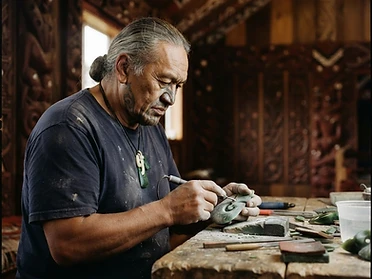
Māori cultural continuity encompasses the language, carving, weaving, performing arts and protocols of the indigenous Māori people of New Zealand. The Māori renaissance of recent decades has strengthened te reo Māori through education and media, and traditions such as haka, hui and whakapapa remain central to identity. The case illustrates how an indigenous culture can renew itself within a modern state through language revitalisation, institutional support and community commitment, and how cultural continuity depends on both policy and lived practice.

Mediterranean Food Heritage
Mediterranean food heritage encompasses the shared food traditions of the countries around the Mediterranean Sea, from olive oil and bread to fish, vegetables, wine and cheese. Inscribed on the UNESCO list of intangible heritage, the Mediterranean diet is more than a set of ingredients: it includes skills, rituals, hospitality and seasonal rhythms. Food heritage transmits family knowledge, regional identity and agricultural practice across generations. Its continuity shows how a food tradition can carry social meaning and sustain local economies while adapting to contemporary life.
Renaissance Workshop Tradition
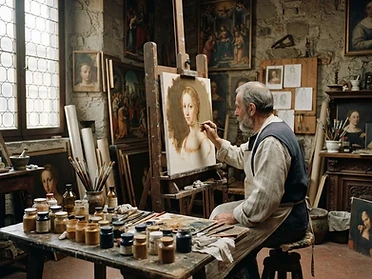
The Renaissance workshop tradition refers to the system of masters, apprentices and studios that produced the art, craft and scientific instruments of the European Renaissance. It transmitted technical knowledge through hands-on apprenticeship, linking art, science and commerce. The workshop model shaped how skills, materials and design knowledge were passed on, and its legacy persists in contemporary craft and design education. The tradition illustrates how continuity of technique depends on structured transmission between generations of practitioners.
European Classical Music Tradition
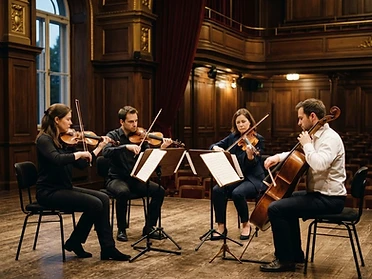
European classical music is a continuous tradition of composed music stretching from medieval chant through Renaissance, Baroque, Classical and Romantic periods to the present. It developed systems of notation, harmony and instrumentation that shaped global music. The tradition is preserved through conservatoires, orchestras, opera houses and festivals, and remains a living repertoire rather than a museum. Its continuity depends on institutional infrastructure for training, performance and publication, illustrating how a high cultural tradition requires sustained investment to transmit across generations.

Orthodox Icon Tradition
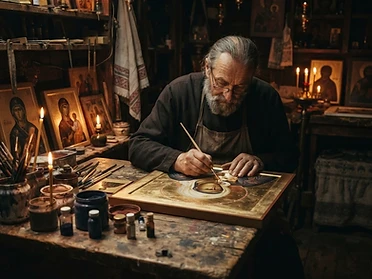
The Orthodox icon tradition is the practice of painting sacred images according to prescribed theological and artistic rules, central to Eastern Orthodox Christian worship. Icons are not merely decorative; they are understood as windows to the sacred and are venerated in church and home. The tradition connects theology, craft, music and architecture across the Orthodox world, from Greece and the Balkans to Russia. Its continuity depends on monastic and lay workshops that transmit techniques of egg tempera, gilding and composition, showing how a religious art form can sustain a dense cultural ecosystem.

European Cathedral Heritage
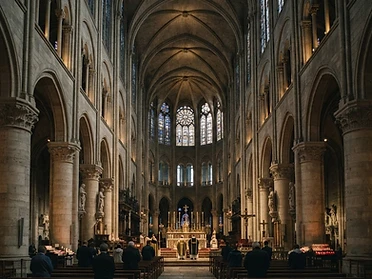
European cathedral heritage encompasses the great churches of the continent, from Romanesque and Gothic masterpieces to Baroque and modern interpretations. Cathedrals are simultaneously architecture, engineering, art, music and civic memory, often built over centuries by successive generations. They embody the Christian heritage that shaped European calendars, universities, music and visual culture, while also standing as public spaces shared by believers and non-believers alike. Their preservation links craft, tourism and public memory, and their continued use illustrates how heritage buildings can remain living institutions rather than mere monuments.


Afro-Brazilian Musical Heritage
Afro-Brazilian musical heritage encompasses samba, capoeira music, candomble rhythms, maracatu and many other forms shaped by the descendants of Africans brought to Brazil through the slave trade. These traditions carry deep connections to African histories while developing distinctively Brazilian forms. Music has been a primary vehicle for preserving and renewing memory, language and community identity across generations. Afro-Brazilian heritage is central to national culture and illustrates how cultural continuity can be sustained through performance even under conditions of historical violence and displacement.


Brazilian Carnival Traditions
Brazilian Carnival is one of the largest cultural festivals in the world, combining music, dance, costume and community organisation in regional forms from Rio's samba schools to the frevo and maracatu of the Northeast. Each style carries local history and social meaning. Carnival is both a popular celebration and a major cultural industry, transmitting music, craft and performance traditions across generations. Its scale and regional diversity make it a central expression of Brazilian cultural continuity and a reminder that national culture can be internally diverse while remaining recognisably shared.

Kente
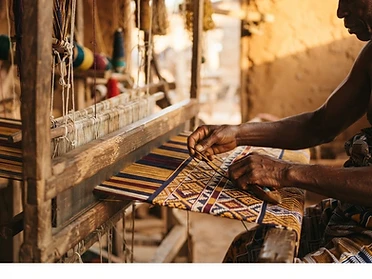
Kente is a handwoven textile tradition of the Akan people of Ghana, historically associated with the Asante and Ewe kingdoms. Each pattern carries a name, a proverb and a meaning, so that a cloth can communicate status, memory and aspiration. Woven in narrow strips and joined together, Kente is both a technical craft and a symbolic language. Today it is recognised internationally as a symbol of Ghanaian and broader African cultural identity, worn at ceremonies and reinterpreted by contemporary designers. Its continuity depends on transmitting knowledge of patterns, weaving technique and meaning to new generations while enabling artisans to earn a living from the tradition.

Amazigh Heritage
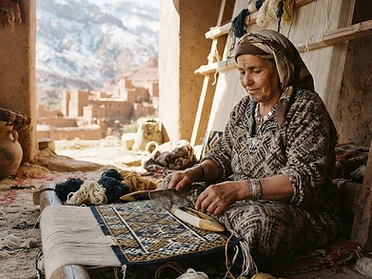
Amazigh, or Berber, heritage is a foundational layer of North African identity, encompassing the Tamazight language, oral poetry, weaving, jewellery, architecture and agricultural traditions of the indigenous peoples of the Maghreb. In Morocco, Amazigh identity is recognised constitutionally alongside Arab-Islamic heritage, and the Tifinagh script is taught and used in public life. The recognition of Amazigh heritage illustrates how a state can define a strong national identity while acknowledging multiple historical layers, and how language revitalisation requires investment in education and media to remain vigorous.

Umuganda
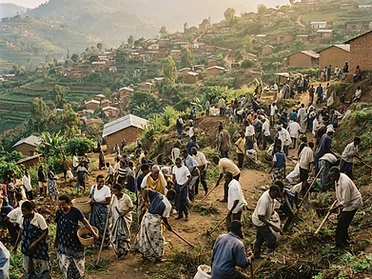
Umuganda is Rwanda's monthly community work practice, in which citizens gather on the last Saturday morning of each month to carry out local public works such as cleaning, building and environmental care. It combines practical local activity with civic participation and is presented as a home-grown solution linking development to shared responsibility. Umuganda is one of several practices through which Rwanda reconstructs national identity around unity and civic engagement after the 1994 genocide. It illustrates how continuity can mean deliberately shaping shared practices to support a different future.


Kiswahili
Kiswahili is a Bantu language with deep historical roots along the East African coast, shaped by centuries of trade and exchange across the Indian Ocean. Promoted after independence as a national language in Tanzania, it created a shared public sphere across many ethnic communities without requiring local languages to disappear. Today it is spoken across East Africa and has gained wider international recognition. Kiswahili demonstrates how a national language can operate above local identities, and how a language remains strong when it has practical utility in education, government and everyday life.

Diwali
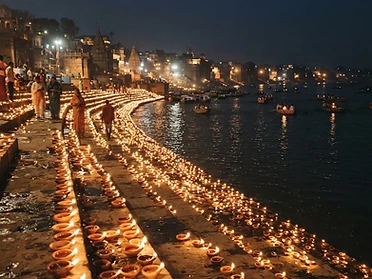
Diwali, the festival of lights, is one of the most important festivals of the Indian subcontinent, celebrated by Hindus, Jains, Sikhs and some Buddhists. It marks the victory of light over darkness and knowledge over ignorance through the lighting of lamps, family gatherings, sweets and prayers. Diwali connects religious meaning, family obligation and seasonal celebration. Its observance varies across regions and communities but the lighting of lamps is near universal. The festival is a primary vehicle for transmitting food, ritual and family traditions across generations, including in the global Indian diaspora.

Hebrew Language Revival
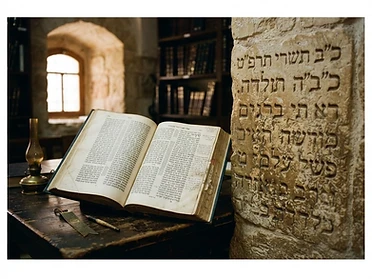
The revival of Hebrew as a spoken everyday language is one of the most remarkable cases of language restoration in history. For centuries Hebrew survived primarily as a language of liturgy, scholarship and literature. In the late 19th and early 20th centuries it was revived as a modern spoken language and became the everyday language of government, education, media and family life in Israel. This created a common communication system for immigrants from many linguistic environments. The case is central to comparative study of language, identity and nation-building.

Arabic Poetry
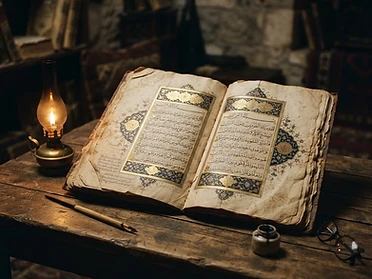
Arabic poetry is one of the oldest and most esteemed literary traditions of the Arab world, with metres and forms codified in pre-Islamic times and continuously renewed since. Poetry has functioned as history, political commentary, love letter and communal memory. The qasida form, with its monorhyme and measured metre, set standards that still influence contemporary verse. Poetry remains a living public art in the Arab world, recited at festivals, broadcast on television and shared on social media. Its continuity demonstrates how a literary form can remain central to public life across more than a millennium.

Arabic Coffee
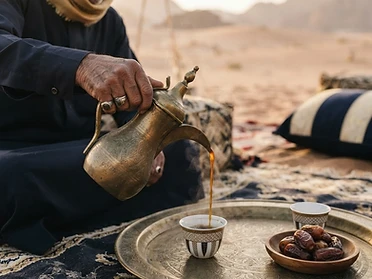
Arabic coffee, or qahwa, is an unsweetened, lightly roasted coffee flavoured with cardamom and often saffron, served in small cups as a mark of hospitality across the Arabian Peninsula and the Arab world. The preparation and serving of coffee is a ritual of welcome, generosity and social order, governed by customs of pouring, receiving and refilling. Inscribed on the UNESCO list of intangible heritage, Arabic coffee is both a daily practice and a ceremonial one, binding families, guests and communities. Its continuity shows how a food tradition can carry social meaning as much as taste.

Lunar New Year
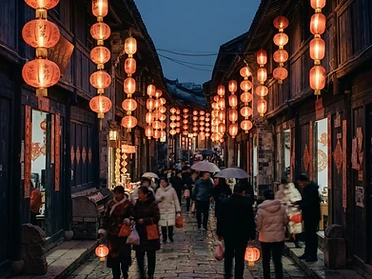
Lunar New Year, known as Spring Festival in China and Tet in Vietnam, is the most important annual festival across much of East Asia. It marks the beginning of the lunar calendar with family reunions, ancestral rites, symbolic foods, decorations and fireworks. The festival is defined by the return home: hundreds of millions of people travel to be with family. It transmits food traditions, kinship obligations and shared symbols across generations. Its scale and persistence make it one of the largest recurring cultural events on earth and a powerful example of how a calendar ritual sustains continuity.

Chinese Calligraphy
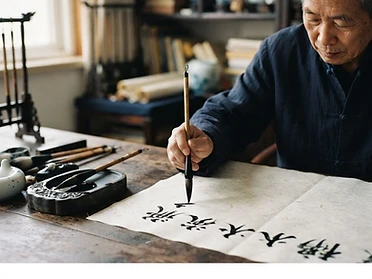
Chinese calligraphy is the art of writing Chinese characters with brush and ink. It is considered one of the highest visual arts in Chinese culture, where the form of a character and the energy of its execution are valued as much as its meaning. Calligraphy connects language, aesthetics, philosophy and personal cultivation. Mastery requires years of practice and an understanding of the historical styles passed down by masters. As a living tradition, it is taught in schools, practised by amateurs and exhibited in museums, linking everyday writing to a continuous artistic lineage stretching back millennia.

Japanese Tea Ceremony
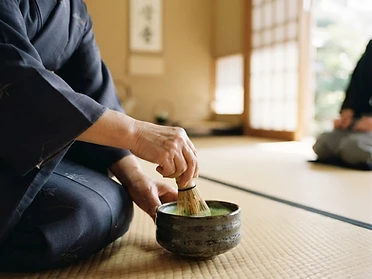
The Japanese tea ceremony, or chanoyu, is a disciplined practice of preparing and serving matcha tea in a choreographed sequence within a deliberately simple room. It brings together architecture, ceramics, calligraphy, flower arrangement and hospitality into a single aesthetic discipline. Far more than a beverage, the ceremony is a school of attention, restraint and form. It remains a specialised discipline yet also a global shorthand for Japanese ideas of attention and hospitality. Its transmission depends on long apprenticeship and on the survival of the craft industries that supply its tools.

Hanami
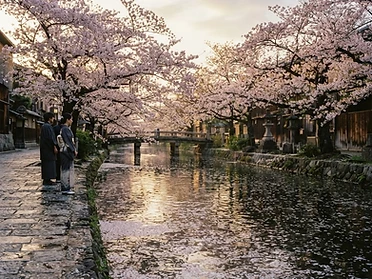
Hanami is the Japanese tradition of viewing and celebrating the seasonal blooming of cherry blossoms. It is simultaneously a popular social event, a seasonal marker and a cultural image with centuries of artistic associations. Families, friends and colleagues gather under blossoming sakura trees in parks and along riverbanks to picnic, reflect and mark the passing of spring. The brevity of the blossom has long carried poetic associations with impermanence. Hanami illustrates how a seasonal ritual can structure everyday social life even as its meaning evolves, and how cultural continuity lives in repeated shared practice rather than in objects alone.