Inuit drum dancing and singing
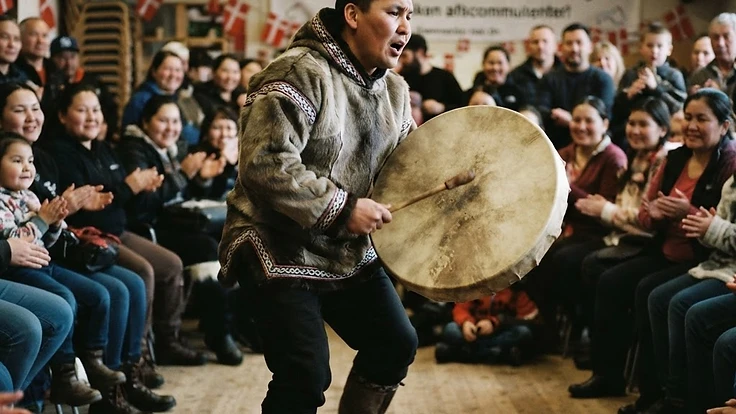
Inuit drum dancing and singing is a performative tradition involving a frame drum made from animal skin and a wooden handle. It serves as a primary medium for storytelling and social cohesion within Inuit communities.
Explanation
The performer holds the drum and strikes the frame rather than the skin, creating a rhythmic accompaniment to songs that recount historical events, personal experiences, or myths. The practice is deeply integrated into social gatherings and celebrations, acting as a vessel for cultural memory. It requires significant skill to balance the physical demands of dancing with the vocal precision needed for the songs. The tradition is a cornerstone of cultural expression in Greenland and among Inuit populations in the Kingdom of Denmark.
Origin & History
This practice has been central to Inuit culture for centuries, serving as a spiritual and social tool for communication. It has survived through oral transmission and community gatherings despite historical pressures.
Why It Matters
It is a vital instrument for the transmission of language and cultural values to younger generations. The drum itself is considered a sacred object that connects the performer to their ancestors.
Living Practice Today
The tradition is actively performed during national holidays and community festivals in Greenland. It is also taught in schools and cultural centres to ensure its continued vitality.
UNESCO Intangible Cultural Heritage List; Greenland National Museum and Archives