Lopapeysa Knitting
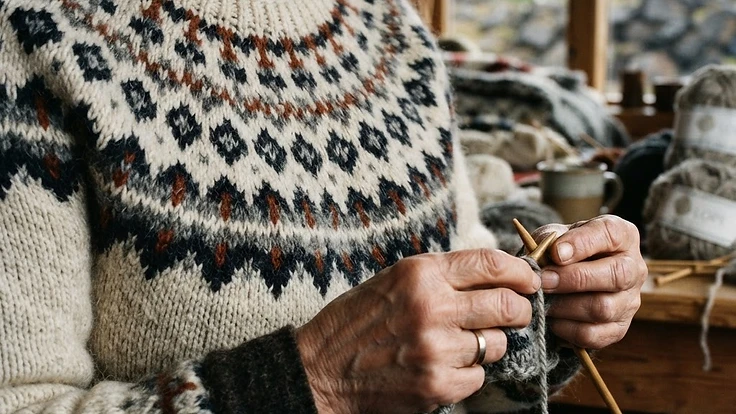
The lopapeysa is a traditional Icelandic sweater knitted from unspun lopi wool. It is characterised by its circular yoke pattern and is a symbol of Icelandic national identity.
Explanation
The craft involves using the unique properties of Icelandic sheep wool, which consists of both water-repellent and insulating fibres. The circular yoke design is typically decorated with geometric patterns inspired by traditional motifs. It remains a vital part of Icelandic material culture and is widely produced by both professional artisans and home knitters. The practice has evolved to incorporate modern fashion trends while maintaining its traditional construction methods.
Origin & History
The style emerged in the early 20th century as a fusion of traditional Icelandic knitting techniques and foreign influences. It became a widespread cultural phenomenon in the mid-20th century as a response to the need for warm, durable clothing.
Why It Matters
It represents the adaptation of local resources to the harsh subarctic climate. The sweater serves as a tangible link to Iceland's agricultural history and domestic craft traditions.
Living Practice Today
The lopapeysa is worn daily by Icelanders and is a significant item in the tourism and export sectors. It continues to be taught in schools and community workshops to ensure the continuity of the craft.
Ministry of Culture and Business Affairs; National Museum of Iceland