Þorrablót
Þorrablót is a midwinter festival celebrated in Iceland during the month of Þorri. It involves the consumption of traditional preserved foods and social gatherings.
Explanation
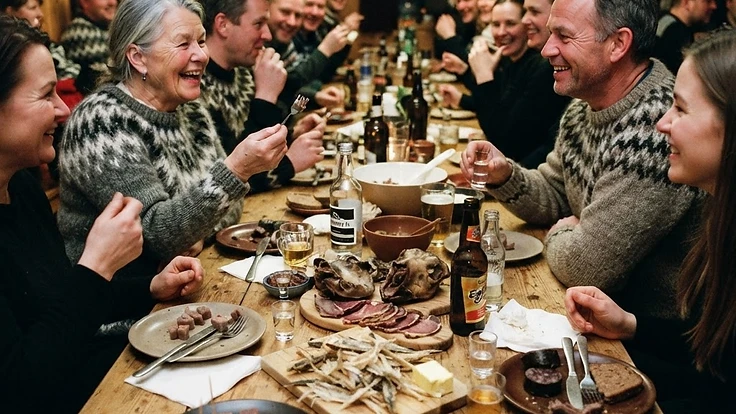
The festival is rooted in ancient Norse traditions and was revived in the 19th century as a cultural celebration. Participants gather to eat traditional foods such as hákarl (fermented shark), svið (sheep's head), and hrútspungar (ram's testicles). The event is accompanied by music, poetry, and storytelling, reinforcing community bonds during the darkest months of the year. It serves as a deliberate act of cultural preservation, connecting modern Icelanders to their ancestral dietary and social customs.
Origin & History
The term originates from the Old Norse blót, which were sacrificial feasts held in honour of the gods. It was modernised in the 1870s to become a secular social event.
Why It Matters
It preserves culinary techniques that were once essential for survival in Iceland's isolated environment. The festival acts as a vital mechanism for maintaining social cohesion and historical awareness.
Living Practice Today
Þorrablót is celebrated across the country in community halls, workplaces, and private homes. It remains a central feature of the Icelandic winter calendar, blending historical reverence with contemporary social life.
National Museum of Iceland; The Árni Magnússon Institute for Icelandic Studies