Summer farming at fäbod and seter
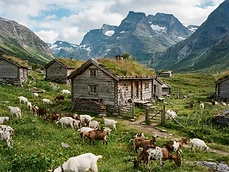
Summer farming involves the seasonal movement of livestock to outlying mountain pastures to graze. This practice integrates animal husbandry, traditional dairy production, and various cultural rituals.
Explanation
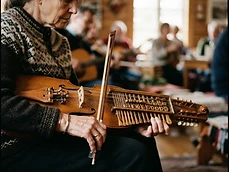
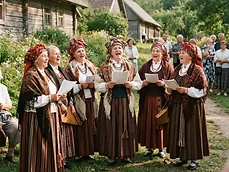
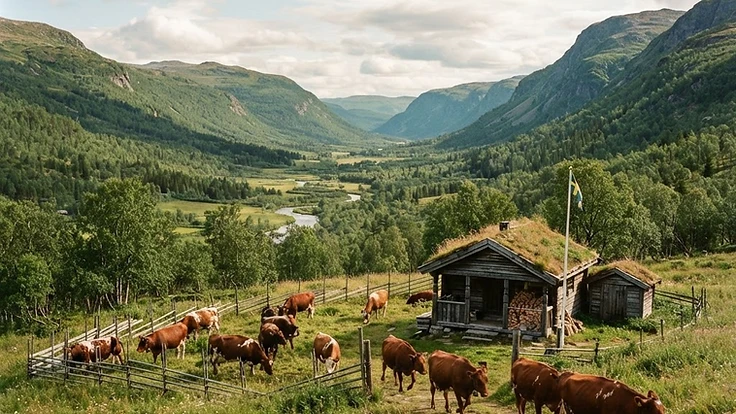
The practice of fäbod involves moving livestock from permanent farms to temporary summer settlements in late spring. This system relies on deep knowledge of land management, animal behavior, and the production of artisanal dairy products like cheese and butter. Beyond the agricultural aspects, the tradition encompasses a rich heritage of herding calls, folk songs, and storytelling. It is a practice that fosters a strong sense of continuity and identity within Scandinavian rural communities.
Origin & History
This tradition has been a cornerstone of Scandinavian agricultural life for centuries, adapting to the specific geography of the northern landscape. It reflects a historical necessity of utilizing outlying lands to sustain livestock during the short growing season.
Why It Matters
It preserves traditional ecological knowledge and maintains the biodiversity of mountain pastures. The practice is a living testament to the historical relationship between humans, animals, and the landscape.
Living Practice Today
While the economic necessity has diminished, the practice is maintained by enthusiasts and small-scale farmers as a way to preserve cultural heritage. It continues to be a source of pride and a method for producing high-quality, traditional food products.
UNESCO Intangible Cultural Heritage; Swedish Ministry of Culture