Summer Farming (Seterdrift)
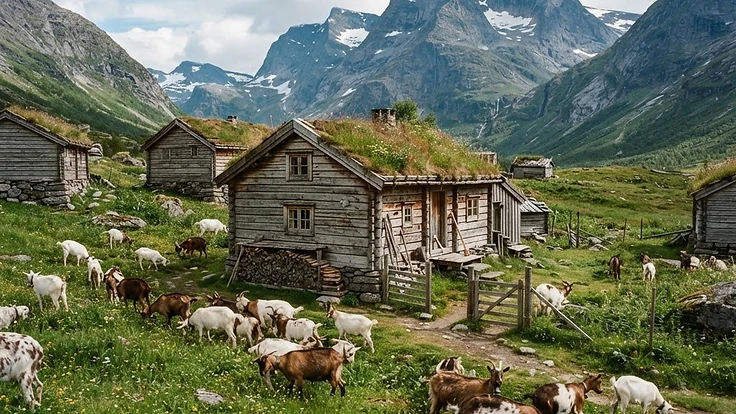
Summer farming involves moving livestock to mountain pastures during the summer months. This practice includes traditional animal husbandry, dairy production, and land management.
Explanation
The practice of seterdrift requires deep knowledge of local ecology and animal behaviour. Farmers move their herds to outlying lands to graze, which helps maintain biodiversity in mountain landscapes. The process includes traditional methods of processing milk into butter, cheese, and sour cream. It also encompasses oral traditions, such as herding calls and storytelling, which are integral to the mountain farm culture.
Origin & History
This system of transhumance has been essential to Norwegian agriculture for centuries. It allowed farmers to preserve lowland hay for winter fodder while utilizing high-altitude grazing resources.
Why It Matters
It represents a sustainable approach to land use and food production. The tradition preserves unique cultural knowledge and maintains the health of mountain ecosystems.
Living Practice Today
While modernized, many summer farms continue to operate as both working farms and sites for sustainable tourism. They remain a vital source of identity and pride for rural communities.
UNESCO Intangible Cultural Heritage Representative List; Norwegian Ministry of Agriculture and Food