Slava, celebration of family saint patron’s day
Slava is a traditional Serbian Orthodox custom of celebrating a family patron saint. It serves as a primary marker of family identity and social cohesion.
Explanation
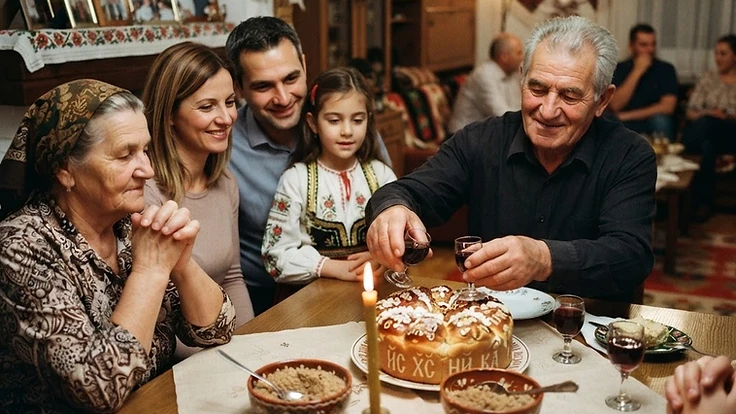
The ritual involves the entire family gathering to honour their patron saint through specific religious and social acts. Central elements include the preparation of a ritual bread, known as slavski kolač, and a wheat-based dish called koljivo. The celebration is passed down through the male line, with the head of the household leading the prayers. It remains a vital practice for maintaining intergenerational links and community solidarity.
Origin & History
The tradition dates back to the Christianisation of the South Slavs in the Middle Ages. It evolved as a unique synthesis of pre-Christian ancestral worship and Orthodox liturgical practice.
Why It Matters
It is considered the most significant expression of Serbian cultural and religious identity. The practice reinforces family bonds and provides a sense of continuity across generations.
Living Practice Today
Slava is widely observed across Serbia and the diaspora, functioning as a major social event for families. It is inscribed on the UNESCO Representative List of the Intangible Cultural Heritage of Humanity.
UNESCO Intangible Cultural Heritage List; Ministry of Culture of the Republic of Serbia