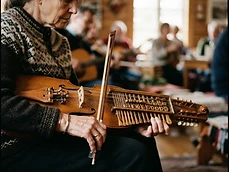
Kaustinen fiddle playing and related practices and expressions
Kaustinen fiddle playing is a distinctive Finnish folk music tradition where the violin serves as the primary melodic instrument. It is characterised by a unique, rhythmic style and a strong emphasis on communal performance.

Explanation
This musical tradition is deeply rooted in the village of Kaustinen and has spread throughout Finland. It involves specific bowing techniques and a repertoire that has been passed down through oral tradition and family lineages. The music is often played in ensembles, creating a lively and inclusive atmosphere. It is a living art form that continues to evolve while maintaining its historical integrity.
Origin & History
The tradition emerged from the rural folk music culture of the Ostrobothnia region, where the fiddle became the dominant instrument for weddings and community celebrations. It has been refined over centuries by local musicians who developed its signature sound.
Why It Matters
It is a vital expression of regional identity and a testament to the resilience of folk music in a modern society. The tradition fosters intergenerational learning and community participation.
Living Practice Today
The tradition is actively maintained through music schools, festivals, and local gatherings that encourage both professional and amateur participation. It remains a central feature of Finnish folk music education and performance.
UNESCO Intangible Cultural Heritage; Kansanmusiikki-Instituutti ry