Surova Folk Feast
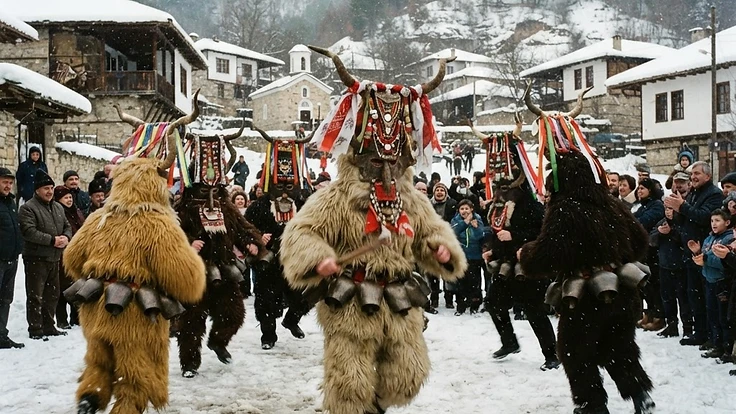
The Surova folk feast is a traditional masquerade ritual performed annually in the Pernik region to mark the beginning of the new year. Participants wear elaborate masks and costumes to perform dances intended to ward off evil spirits and ensure fertility.
Explanation
During the Surova festival, groups known as Survakari visit homes in their villages, performing rhythmic dances accompanied by traditional music. The masks, often made from animal skins, horns, and feathers, are designed to be intimidating to drive away malevolent forces. This ritual is a communal event that strengthens social bonds and reinforces the collective identity of the village inhabitants. The preparation of the costumes is a year-long process, involving the entire community in the creation of these intricate ceremonial items.
Origin & History
The roots of the Surova ritual are found in ancient agrarian traditions that sought to influence the natural cycle of the seasons. It has been continuously practised for centuries, adapting to modern social structures while retaining its core ceremonial elements.
Why It Matters
It is a significant expression of intangible heritage that demonstrates the resilience of folk traditions in the face of urbanisation. The ritual serves as a vital mechanism for intergenerational knowledge transfer and community cohesion.
Living Practice Today
The practice remains highly active, with the annual International Festival of Masquerade Games in Pernik serving as a major platform for its performance. It continues to be a central event in the local calendar, drawing participants and spectators from across the country.
UNESCO Intangible Cultural Heritage List; Regional Historical Museum Pernik