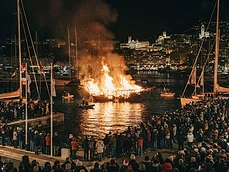
The Feast of Saint Agatha
The Feast of Saint Agatha is a significant religious and civil commemoration held annually on 5 February. It honours the patron saint of the republic and celebrates the liberation of San Marino from foreign occupation.
Explanation
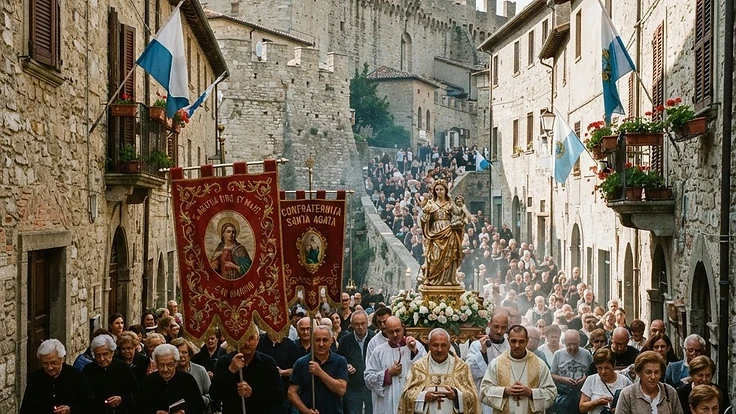
The feast combines liturgical services with civil celebrations to commemorate the end of the occupation by Cardinal Alberoni in 1740. It involves a solemn procession through the streets of the capital, where the relics of the saint are carried by the faithful. The day is a public holiday, reflecting the intersection of religious devotion and national pride. It serves as a moment for the community to reflect on the historical resilience of the state.
Origin & History
The tradition originated in the 18th century following the restoration of the republic's independence after the occupation. It was established to give thanks for the preservation of the state's liberty.
Why It Matters
It represents the historical link between the spiritual life of the citizens and the political survival of the nation. The feast is a vital component of the collective memory of the Sammarinese people.
Living Practice Today
The feast is celebrated with traditional masses and public gatherings that bring together the local population. It remains a key date in the national calendar, reinforcing social bonds and historical awareness.
Ministry of Education, Culture and University; National Museum of San Marino