Baltic song and dance celebrations
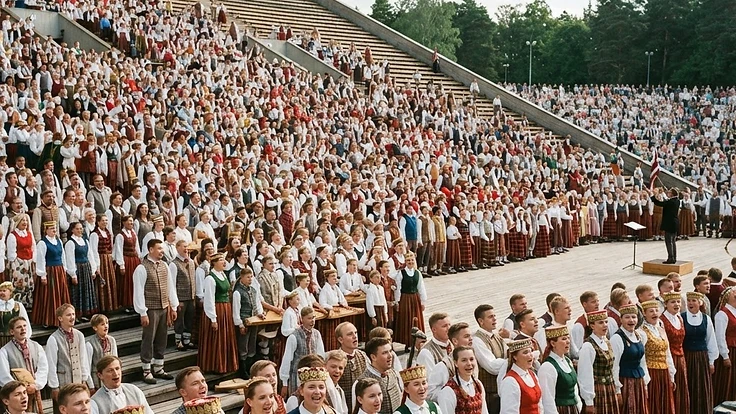
This massive cultural event involves tens of thousands of participants performing choral music and folk dances. It serves as a vital expression of national identity and collective memory for the Latvian people.
Explanation
The celebration is a multi-day festival that takes place every five years in Riga, drawing performers from across the country. It features complex choral arrangements of traditional folk songs and intricate choreographies performed by thousands of dancers in regional costumes. The event is deeply rooted in the 19th-century national awakening and has survived various political regimes as a symbol of cultural resilience. It requires extensive preparation and community involvement, fostering intergenerational transmission of musical and dance traditions.
Origin & History
The tradition originated in the late 19th century during the Latvian national awakening movement. The first festival was held in 1873 and has since become a cornerstone of national cultural life.
Why It Matters
It acts as a primary mechanism for preserving the Latvian language and folk heritage. The event reinforces social cohesion and provides a platform for the continuous evolution of national artistic expression.
Living Practice Today
Today, the festival remains a highly anticipated national event that attracts massive public participation and international attention. It continues to adapt to modern artistic standards while maintaining its core traditional repertoire.
UNESCO Intangible Cultural Heritage; Latvian Ministry of Culture