Corso culture, flower and fruit parades
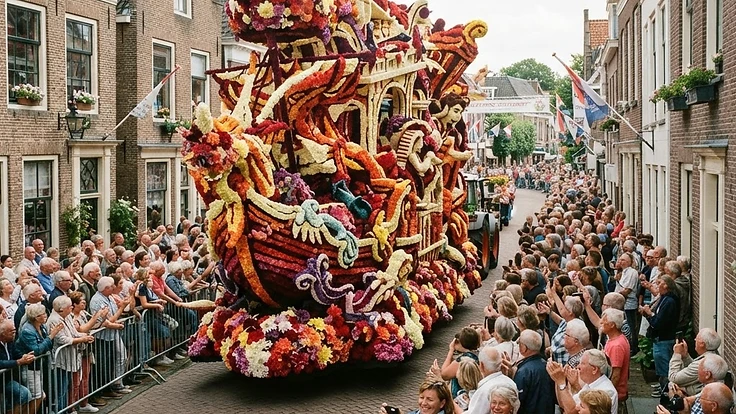
Corso culture involves the elaborate construction of large-scale floats decorated with flowers or fruit for public parades. These events are community-driven and rely on extensive volunteer cooperation.
Explanation
The parades are a central feature of local identity in various Dutch municipalities, often involving months of preparation by community groups. Participants use thousands of dahlias or other seasonal produce to create intricate designs on steel and papier-mâché structures. The practice fosters social cohesion and intergenerational knowledge transfer within the participating villages and towns. It is a highly visible expression of local pride and artistic collaboration.
Origin & History
The tradition emerged in the early 20th century as a way to celebrate local harvests and community spirit. Over decades, it evolved from simple floral displays into the complex, competitive engineering feats seen today.
Why It Matters
It serves as a vital mechanism for maintaining social networks and local cultural distinctiveness in rural and semi-urban areas. The practice demonstrates the ability of communities to sustain complex, non-commercial traditions through collective effort.
Living Practice Today
Today, the parades attract thousands of spectators and are supported by local heritage foundations. They remain a living tradition that adapts to modern aesthetic trends while preserving historical techniques.
UNESCO Intangible Cultural Heritage List; Dutch Centre for Intangible Cultural Heritage