The Demographic Echo: Mapping Serbia’s Population Contraction Since 1991
A longitudinal analysis of census data reveals how migration, conflict, and fertility shifts have reshaped the Serbian landscape over three decades.
- Serbia's total fertility rate remains consistently below the 2.1 replacement level.
- The 2022 Census data shows a shift in the age dependency ratio, straining social services.
- Post-1991 conflict initiated a long-term pattern of displacement and outward migration.
- UN DESA classifies the current situation as a 'demographic trap' difficult to reverse via birth rate alone.
- Research indicates that human capital flight from the Serbian interior remains a primary driver of contraction.
- SORS reports confirm continuous population decline despite periods of macroeconomic growth.
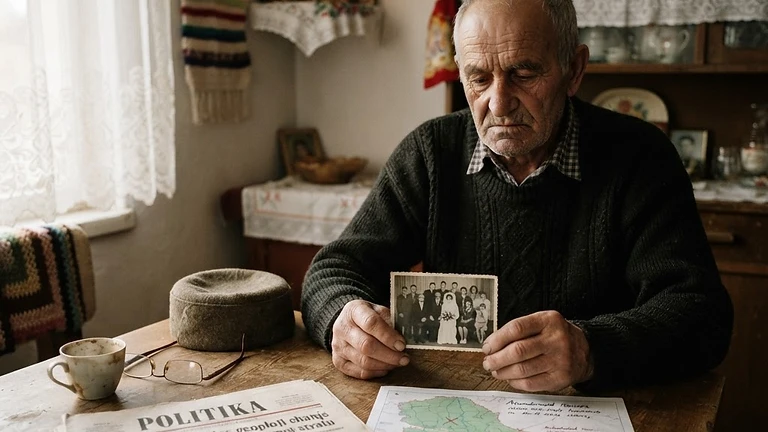
The Demographic Echo: Mapping Serbia’s Population Contraction Since 1991: editorial illustration for NATION CONTINUITY.
The Anatomy of Post-1991 Displacement
Since the dissolution of the Socialist Federal Republic of Yugoslavia in 1991, Serbia has experienced sustained demographic volatility. Data from the Statistical Office of the Republic of Serbia (SORS) indicates that the nation’s population has undergone a consistent downward trajectory, a shift inextricably linked to the geopolitical and economic instability characterizing the post-1990s environment [1]. The initial contraction phase was defined by the mass displacement of peoples during the Yugoslav Wars. These conflicts acted as a catalyst for internal migration and established the precursor for long-term emigration patterns that continue to define the Serbian socio-economic landscape [1]. According to SORS, these trends have created a permanent demographic deficit, as the total population continues to shrink below the levels recorded in the final decade of the 20th century [1].
Fertility Stagnation and the Second Demographic Transition
The contemporary demographic crisis is characterized by the structural interplay between low fertility rates and an aging populace. The UNDP National Human Development Report identifies this as a critical structural concern, noting that human development outcomes are tethered to these shifts [2]. Serbia is currently embedded in the 'second demographic transition,' a process marked by the sustained postponement of marriage and childbearing. According to research published by the Institute of Social Sciences, Serbia’s total fertility rate has remained consistently below the replacement level of 2.1 births per woman [4]. This trend is not an outlier but a manifestation of a regional phenomenon described by the OSW Centre for Eastern Studies as the systematic 'vanishing' of the Balkan population base, where the lack of replacement-level fertility is compounded by the emigration of the most reproductive age groups [6].
Longitudinal Shifts in Age Dependency Ratios


The results of the 2022 Census, evaluated in Economic Analysis: Applied Research in Emerging Markets, underscore a rapid shift in Serbia’s age dependency ratio [5]. As younger, working-age cohorts migrate toward European Union labor markets, the domestic economy faces a dual fiscal burden: a declining tax base and an expanding demand for geriatric social services [5]. The UN Department of Economic and Social Affairs (UN DESA) in its World Fertility 2024 report validates this assessment, noting that the synergy between deep aging and emigration creates a 'demographic trap' where recovery through birth rate stabilization alone is statistically improbable under current conditions [3]. Data suggests that the dependency ratio has shifted significantly, placing increased strain on national healthcare infrastructure and the sustainability of the state pension system [5].
Structural Resistance and the Failure of Pronatalism
State-led attempts to reverse these trends via pronatalist policies have faced significant hurdles. The Institute of Social Sciences suggests that the trauma associated with the economic instability of the 1990s permanently altered societal perceptions of long-term security, leading individuals to favor short-term migration as a strategy to hedge against future uncertainty [4]. SORS estimates confirm that this behavioral inertia has kept population projections trending downward, even during intervals of macroeconomic growth [1]. The persistence of these trends suggests that institutional interventions have yet to decouple migration behavior from the lingering effects of the 1990s institutional collapse, resulting in a persistent outflow of human capital that state policies have failed to incentivize to return [4].
The Predictive Limits of Demographic Modeling
Demographic models must be distinguished from retrospective census data. Research evaluating the 2011-2041 population projections highlights that these models are inherently vulnerable to exogenous shocks, such as unforeseen regional labor mobility policies or shifts in international economic integration [5]. While current data points to a continued thinning of the rural population, the high volatility of global labor markets dictates that these projections are subject to frequent downward revisions [5][6]. The evidence suggests that current policy frameworks have struggled to account for the velocity of human capital flight from the Serbian interior, making long-term forecasting increasingly difficult for planners tasked with managing regional development [5].
Mid-Century Projections and Human Capital
The demographic contraction of Serbia represents a synthesis of mid-century conflict and a 21st-century exhaustion of human capital. By analyzing the interplay between fertility stagnation and the structural outflow of youth, the challenges facing the Serbian state become clear: the legacy of 1991 is not merely a matter of administrative borders, but of a fundamentally altered social fabric [2][6]. Future stability will rely on the capacity of state institutions to mitigate the effects of the demographic trap described by UN DESA, specifically regarding the sustainability of the pension and healthcare systems [3][5]. Addressing these challenges requires not only pronatalist measures but also comprehensive structural reforms aimed at retaining domestic talent and stabilizing the socioeconomic environment for the next generation [6].
The analysis relies on primary data from the Statistical Office of the Republic of Serbia (SORS) and international development reports from the UNDP and UN DESA. Academic perspectives are drawn from the Institute of Social Sciences and the OSW Centre for Eastern Studies to provide context on the systemic nature of the Balkan demographic crisis.
The NATION CONTINUITY Editorial Desk produces AI-assisted editorial content — research, drafting and media generated under the publication's source, quality and discovery standards, then reviewed before publication.