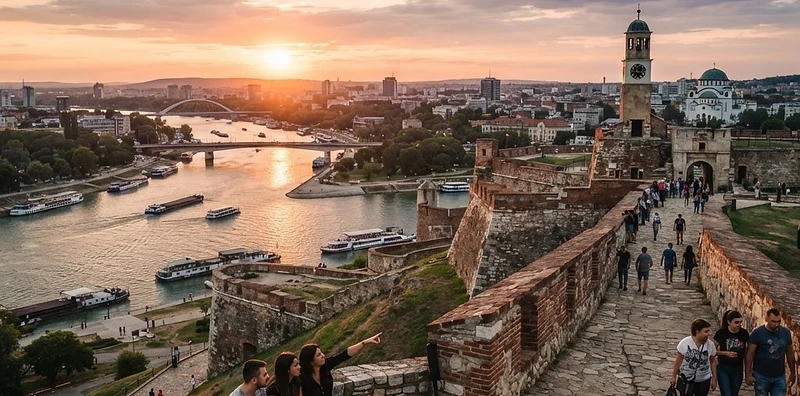
Serbia
The largest Western Balkan state, with severe depopulation in the south and east and strong diasporic cultural financing.
Local name: Србија
Recognised regional or minority languages: Hungarian, Bosnian, Slovak, Romanian, Croatian, Romani, Albanian
Source labels and dataset codes are those published by the statistical authority named on each row. Figures are reproduced as retrieved, without interpolation.
The Republic of Serbia (Србија) is a landlocked country situated in the central and southeastern regions of the Balkan Peninsula. Its capital is Belgrade. The official language is Serbian, which uses both Cyrillic and Latin scripts. Under the European Charter for Regional or Minority Languages, the country formally recognizes several minority languages, including Hungarian, Bosnian, Slovak, Romanian, Croatian, Romani, and Albanian. Serbia is defined by its position as a historical crossroads between Central Europe and the Mediterranean, which has fostered a complex cultural synthesis. Its demographic and cultural continuity is anchored by the Slava, a unique tradition of family patron saint veneration, and a long-standing history of rural craftsmanship and folk arts that persist despite significant urbanization. The nation maintains a parliamentary democratic system and continues to navigate the challenges of population aging and regional migration patterns while preserving its distinct linguistic and religious heritage.
UNESCO Intangible Cultural Heritage: Slava, celebration of family saint patron’s day · Kolo, traditional folk dance · Singing to the accompaniment of the Gusle · Zlakusa pottery making, hand-wheel pottery making in the village of Zlakusa · Social practices and knowledge related to the preparation and use of the traditional plum spirit – šljivovica · Naïve painting practices of Kovačica

Stories

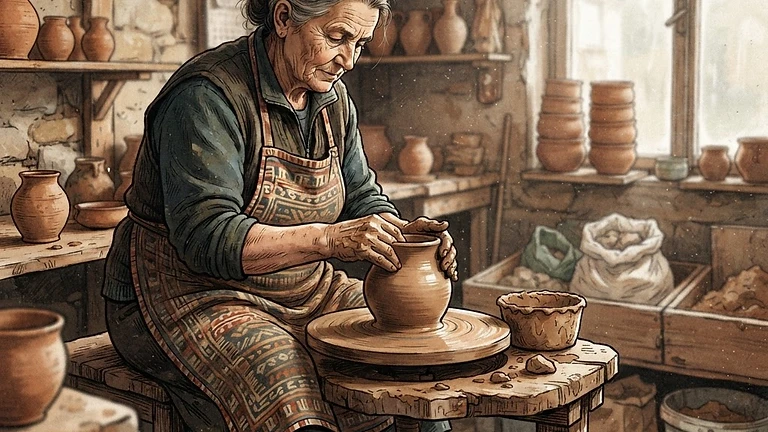
Serbia in the Atlas

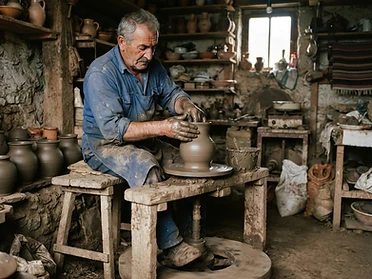

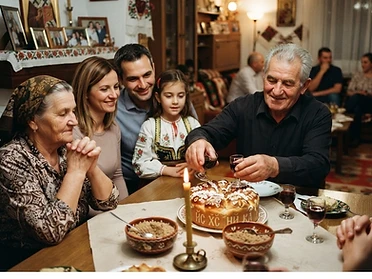
Strategy for the Development of Culture of the Republic of Serbia
This strategy outlines the framework for the preservation and promotion of cultural heritage, including intangible practices. It emphasizes the role of state institutions in supporting traditional arts and ensuring their transmission to future generations.
- Instrument
- Strategy
- Year
- 2020
- Scope
- Serbia national policy