Subterranean Ingenuity: The Enduring Legacy of Indian Stepwells
Exploring the architectural complexity and social history of baolis as vital centers for water conservation and community life.
- Stepwells functioned as both essential water collection sites and communal gathering spaces in semi-arid regions.
- Rani-ki-Vav at Patan is identified by UNESCO as a masterpiece of the Maru-Gurjara architectural style.
- Subterranean architecture allowed for natural climate control, providing relief from extreme heat.
- Heritage documentation efforts aim to preserve the physical structure and cultural narratives embedded in stepwell masonry.
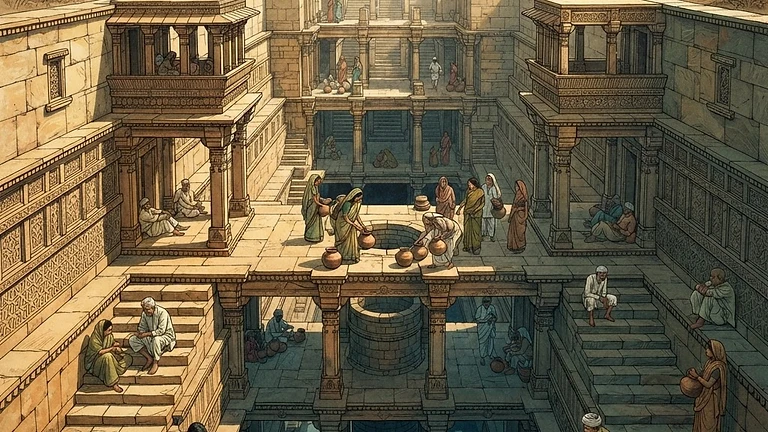
Subterranean Ingenuity: The Enduring Legacy of Indian Stepwells: AI-generated editorial illustration for NATION CONTINUITY.
Architecture as a Response to Aridity
Stepwells, or baolis, are unique subterranean structures developed over centuries in the semi-arid regions of the Indian subcontinent to provide reliable water access. As documented by the UNESCO World Heritage Centre, these structures evolved from simple pits into elaborate, multi-storied architectural feats. The Rani-ki-Vav at Patan serves as a premier example, demonstrating how builders combined engineering necessity with intricate artistic design, effectively turning water collection into a public monument.
Community Institutions and Cultural Memory
Beyond their primary function as water sources, stepwells served as vital social institutions. By providing a cool, sheltered environment below ground level, they functioned as natural retreats during peak heat. The architectural layout—often featuring galleries, stairs, and ornate pillars—encouraged communal interaction, making these spaces integral to the daily life of surrounding populations. This design reflected a cultural understanding of water as a shared, precious resource that demanded both engineering diligence and collective stewardship.

Documentation and Contemporary Preservation
Today, heritage organizations are actively documenting these structures to ensure their survival. UNESCO highlights the importance of maintaining the physical integrity of sites like Rani-ki-Vav, which captures the zenith of the Maru-Gurjara architectural style. Preservation efforts focus not only on the stone masonry but also on the historical memory embedded in the carvings, which depict various aspects of life, mythology, and social hierarchy. By treating these sites as living heritage, researchers and conservationists aim to bridge the gap between ancient water management techniques and contemporary sustainability needs.
Sources
- UNESCO World Heritage Centre: Rani-ki-Vav (the Queen’s Stepwell) at Patan, Gujarat (https://whc.unesco.org/en/list/922).
UNESCO World Heritage Centre — Rani-ki-Vav (the Queen’s Stepwell) at Patan, Gujarat
The NATION CONTINUITY Editorial Desk produces AI-assisted editorial content — research, drafting and media generated under the publication's source, quality and discovery standards, then reviewed before publication.