The Resilient Echo of the Hammer: Thatheras of Jandiala Guru
In the streets of Jandiala Guru, the rhythmic clanging of hammers against heated metal preserves a UNESCO-recognized tradition of brass and copper craftsmanship.
- The craft of the Thatheras of Jandiala Guru is inscribed on the UNESCO Representative List of the Intangible Cultural Heritage of Humanity.
- The production process involves specific metalworking techniques using fire and manual hammering.
- Knowledge of this craft is traditionally passed down through generations within the community.
- The practice is centered on the creation of brass and copper utensils.
- UNESCO identifies this craft as a significant element of India's intangible cultural heritage.
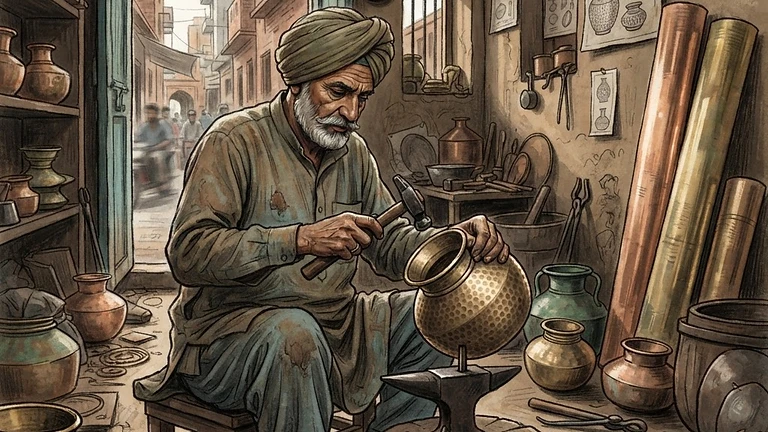
The Resilient Echo of the Hammer: Thatheras of Jandiala Guru: AI-generated editorial illustration for NATION CONTINUITY.
A Legacy Forged in Metal
In the small town of Jandiala Guru, located in the Punjab region of India, a distinct sound has echoed for generations: the precise, rhythmic striking of brass and copper sheets. This acoustic signature belongs to the Thatheras, a community whose specialized manufacturing skills have become a cornerstone of India's intangible cultural heritage. As recognized by UNESCO, the Thatheras utilize unique manual techniques to create essential household vessels, a practice that defines both their social identity and their economic survival.
The Art of the Craft
The craft is defined by a deep technical knowledge passed down through generations. According to UNESCO, the process is not merely about production; it is a collaborative exercise in precision. Metal is treated with acidic agents and heated over controlled fires before being shaped by hand. The surface is often finished using a technique involving a specific rhythm of hammering, which not only gives the vessels their aesthetic appeal but also provides the durability required for daily use. These techniques rely on an intergenerational transmission of tacit knowledge, where masters train younger members of the community in the nuances of heat regulation and manual shaping.


Socio-Economic Realities and Modernity
While the craft remains an important cultural marker, the Thatheras face significant challenges in an era dominated by mass-produced, factory-made kitchenware. The shift toward cheaper, machine-pressed goods has pressured the community to adapt. The struggle to maintain a niche for handcrafted vessels is balanced by the community's effort to keep their ancestral skills alive in a changing market. UNESCO notes that the practice is sustained through the dedication of these living communities, who balance their historical methods with the practicalities of modern demand. The survival of this craft is therefore not a static phenomenon, but an evolving negotiation between traditional hand-production and the globalized industrial landscape.
Sources
- Traditional brass and copper craft of utensil making among the Thatheras of Jandiala Guru, Punjab, India — UNESCO (2014) https://ich.unesco.org/en/state/india-IN?info=elements-on-the-lists
UNESCO — Traditional brass and copper craft of utensil making among the Thatheras of Jandiala Guru, Punjab, India
The NATION CONTINUITY Editorial Desk produces AI-assisted editorial content — research, drafting and media generated under the publication's source, quality and discovery standards, then reviewed before publication.