The Living Rituals of Mudiyettu: Safeguarding Kerala's Performance Heritage
Deep in the village communities of Kerala, the ritual theatre of Mudiyettu remains a vibrant, evolving testament to community-led artistic transmission.
- Mudiyettu is a ritual theatre and dance drama from Kerala.
- The performance depicts the battle between Bhadrakali and the demon Darika.
- UNESCO inscribed Mudiyettu on the Representative List of the Intangible Cultural Heritage of Humanity in 2010.
- Transmission occurs through informal, community-based master-apprentice learning.
- The practice is multi-disciplinary, involving complex costuming, rhythm, and dance.
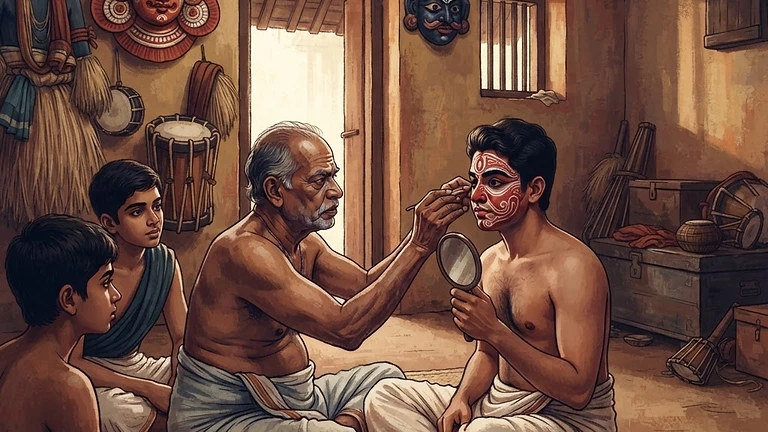
The Living Rituals of Mudiyettu: Safeguarding Kerala's Performance Heritage: AI-generated editorial illustration for NATION CONTINUITY.
The Essence of Mudiyettu
In the vibrant cultural landscape of Kerala, Mudiyettu stands as a distinctive ritual theatre and dance drama tradition. Recognized by UNESCO as an essential element of the Intangible Cultural Heritage of Humanity, it is not merely a performance but a deeply embedded social practice. According to UNESCO, this tradition captures the mythological battle between the goddess Bhadrakali and the demon Darika, transforming complex narratives into a multi-disciplinary stage experience.
The Rigor of Transmission
The survival of Mudiyettu relies heavily on the informal education systems within village communities. Unlike institutionalized academic learning, this art form is transmitted through a master-apprentice model, where knowledge of intricate makeup, costuming, musical rhythms, and specific choreographic patterns is passed down across generations. Practitioners must master both the physical demands of the dance and the vocal nuances required for the enactment. The process is demanding, requiring years of commitment to internalize the stylistic vocabulary of the performance.
Community as the Custodian


At its core, Mudiyettu is a collective endeavor. The staging of the ritual involves a wide array of community members, from those who prepare the natural pigments for the elaborate face painting to the musicians who provide the percussive backdrop for the performance. This involvement ensures that the ritual remains a living tradition rather than a static museum piece. By engaging the youth in the preparation and support roles, the tradition ensures its own continuity within the shifting social dynamics of modern Kerala.
Contemporary Perspectives
While Mudiyettu is firmly rooted in historical practices, it is not immune to change. Contemporary performers often negotiate the balance between traditional ritualistic accuracy and the requirements of modern stage performance. UNESCO notes that such elements on the Representative List of the Intangible Cultural Heritage of Humanity are dynamic, reflecting the community’s evolving relationship with their heritage. The practice continues to be a focal point for researchers and practitioners alike, serving as a lens through which the community views its own history and identity.
Sources
- UNESCO: Mudiyettu, ritual theatre and dance drama of Kerala (2010). https://ich.unesco.org/en/state/india-IN
UNESCO — Mudiyettu, ritual theatre and dance drama of Kerala
The NATION CONTINUITY Editorial Desk produces AI-assisted editorial content — research, drafting and media generated under the publication's source, quality and discovery standards, then reviewed before publication.