India
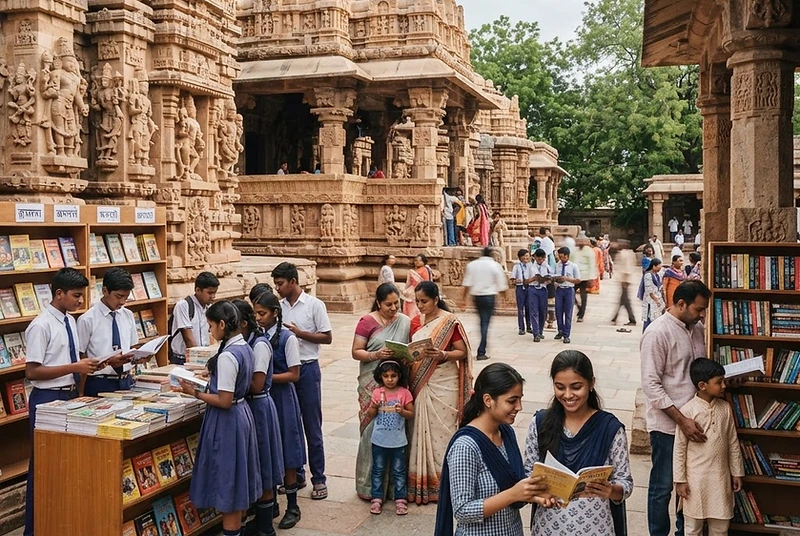
India forces any discussion of national identity to confront scale and plurality. A state of more than a billion people, hundreds of languages and enormous religious variation, it debates its future through the vocabulary of civilisation and heritage. Hindi, English and constitutionally recognised languages each carry major literary worlds. The Indian diaspora connects the country to North America, Europe, the Gulf, Africa and Southeast Asia, making cultural continuity a global phenomenon.
Hindu majority; large Muslim, Christian, Sikh, Buddhist and Jain communities.
India — भारत, Bhārat — is a union of states reorganised largely along linguistic lines, with twenty-two scheduled languages, Hindi and English used for Union administration, and classical traditions in Tamil, Sanskrit, Telugu, Kannada, Malayalam and Odia. Continuity runs through the Sanskrit epics and Puranic storytelling, through Bharatanatyam, Kathakali, Odissi and Kathak, through Hindustani and Carnatic music, and through yoga and Ayurveda, both inscribed by UNESCO as intangible heritage. Caste, tribe, religion and language intersect in ways that make any single account incomplete: Adivasi communities, Dalit intellectual traditions, Sikh, Muslim, Christian, Jain, Buddhist and Parsi institutions all hold distinct archives. Block-printing, ikat, patachitra, bamboo craft and bronze casting persist as living economies, not only as heritage displays.
Local names and languages — भारत · Bhārat · Bhārat Gaṇarājya · हिन्दी Hindi · தமிழ் Tamil · বাংলা Bengali

Stories

India: Civilisation, Plurality and the Modern Nation-State
India forces any discussion of national identity to confront scale and plurality: a billion people, hundreds of languages and enormous variation.

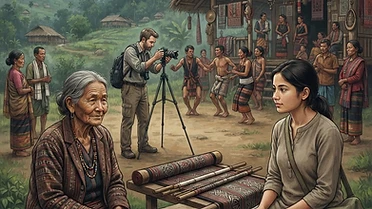
Preserving the Tapestry: Documentation of Indigenous Cultural Heritage in India
This report examines the North-East India Documentation Project and the Adi Drishya Programme, detailing how state-led efforts record the living, evolving heritage of tribal groups.

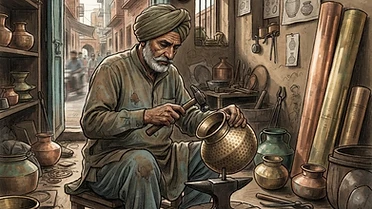
The Resilient Echo of the Hammer: Thatheras of Jandiala Guru
Discover the intricate metalworking techniques of the Thatheras of Jandiala Guru, a community dedicated to sustaining their ancestral craft against the backdrop of modern industrialization.

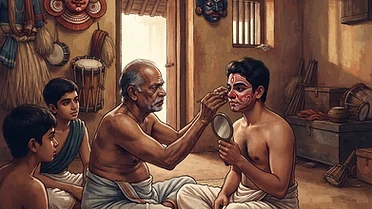
The Living Rituals of Mudiyettu: Safeguarding Kerala's Performance Heritage
Mudiyettu is a traditional ritual theatre and dance drama practiced in Kerala, depicting the mythological struggle between Bhadrakali and the demon Darika. It serves as a vital example of how intangible heritage is actively maintained through rigorous training and community participation.

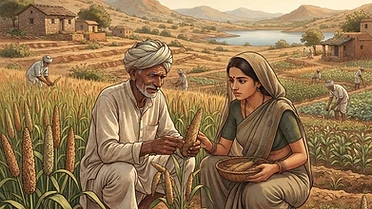
Resilient Grains: The Revival of Traditional Millet Farming in India
A shift toward traditional millet cultivation is helping Indian farmers combat climate uncertainty while preserving vital agricultural knowledge for future generations.