Resilient Grains: The Revival of Traditional Millet Farming in India
Across India, farming communities are blending ancestral wisdom with modern agricultural science to secure food stability through indigenous millet varieties.
- Millets have historically served as significant components of Indian traditional diets according to the FAO.
- The FAO reports that millets require minimal water compared to many industrial crop alternatives.
- ICAR-IIMR provides systematic scientific documentation of indigenous millet seed varieties.
- Institutional support from ICAR is facilitating the transmission of traditional farming knowledge across generations.
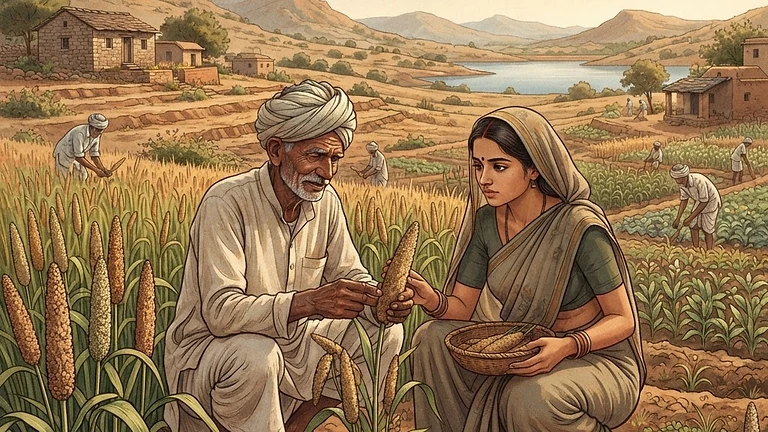
Resilient Grains: The Revival of Traditional Millet Farming in India: AI-generated editorial illustration for NATION CONTINUITY.
The Return of Ancient Staples
In various regions across India, a quiet transition is taking place in the fields. Farmers, supported by institutional research, are shifting their focus back to millets—a group of hardy, small-seeded grasses that have served as dietary staples for centuries. According to the Food and Agriculture Organization (FAO), the International Year of Millets 2023 highlighted these grains not merely as historical relics but as essential tools for contemporary food and nutritional security. These crops, once overshadowed by industrial mono-cropping, are being reclaimed for their drought-resistant properties and minimal water requirements.
Bridging Traditional Knowledge and Modern Science
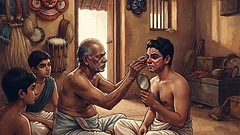
The transmission of farming techniques remains a dynamic, living practice. The Indian Council of Agricultural Research-Indian Institute of Millets Research (ICAR-IIMR) plays a central role in this process by documenting indigenous seed varieties and providing scientific validation for traditional practices. Rather than replacing local methods, this institutional framework works to complement the oral traditions passed down through farming families, ensuring that the nuances of soil management and seed saving are preserved in a rapidly changing climate.

Challenges and Ongoing Evolution
While the movement to restore millets is significant, it is not a monolithic transition. Perspectives on these crops vary; while some view them as the primary solution for future-proofing agriculture, others note that the integration of these grains into modern markets requires careful balancing of infrastructure and economic support. The resilience of this agricultural model depends heavily on the continued safeguarding of biodiversity and the active involvement of farming communities. The documentation provided by ICAR-IIMR serves as a bridge, ensuring that the knowledge of how to cultivate these grains remains accessible, flexible, and responsive to the specific ecological needs of different Indian regions.
Sources
- Food and Agriculture Organization (FAO): International Year of Millets 2023 documentation on historical dietary significance and sustainability.
- Indian Council of Agricultural Research (ICAR) - Indian Institute of Millets Research: Mandate on seed conservation and institutional support for farming knowledge.
Food and Agriculture Organization (FAO) — International Year of Millets 2023; Indian Council of Agricultural Research (ICAR) - Indian Institute of Millets Research — ICAR-IIMR Mandate and Research
The NATION CONTINUITY Editorial Desk produces AI-assisted editorial content — research, drafting and media generated under the publication's source, quality and discovery standards, then reviewed before publication.