Safeguarding the Yaokwa: The Enawene Nawe Ritual Cycle
The Yaokwa ritual remains essential to the Enawene Nawe social and cosmic order, yet shifting environmental conditions place the future of this cultural practice at a crossroads.
- The Yaokwa ritual is essential for maintaining the social and cosmic order of the Enawene Nawe people.
- Hydroelectric plant development has negatively impacted fish stocks critical to the ritual's performance.
- Safeguarding the Yaokwa requires protecting the regional biodiversity and supporting the community's belief systems.
- UNESCO recognizes the Yaokwa as a significant intangible cultural heritage practice in Brazil.
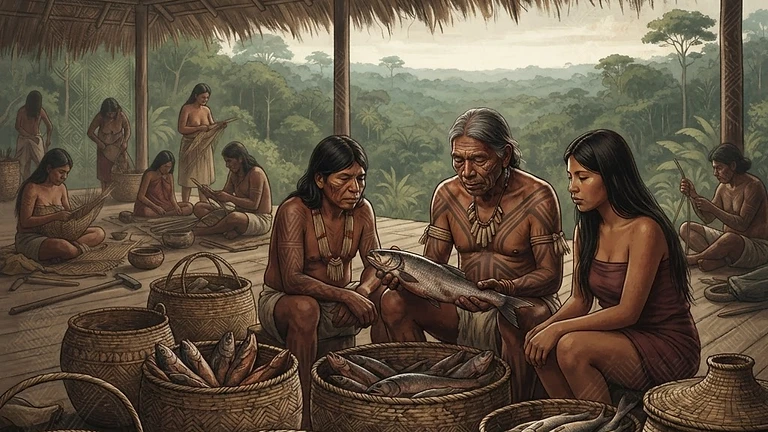
Safeguarding the Yaokwa: The Enawene Nawe Ritual Cycle: AI-generated editorial illustration for NATION CONTINUITY.
The Significance of the Yaokwa
The Yaokwa is a foundational ritual cycle for the Enawene Nawe people, serving as a critical mechanism to maintain both social cohesion and cosmic order. According to documentation from UNESCO, this complex series of ceremonies governs the community's relationship with their environment and the spiritual realm. Through the exchange of salt and fish, the ritual cycle reinforces kinship bonds and structures the transition of seasons, acting as a living repository of the community's knowledge and heritage.
Environmental Challenges and Biodiversity
The survival of the Yaokwa is intrinsically linked to the health of local ecosystems, particularly the fish populations that are central to the ritual's performance. Recent reports from UNESCO indicate that the development of hydroelectric plants has significantly impacted river biodiversity. These infrastructure projects have caused fluctuations in fish stocks, directly challenging the community's ability to fulfill the requirements of the ritual cycle. As the availability of essential natural resources declines, the Enawene Nawe face ongoing difficulties in preserving the consistency of their traditional practices.

Pathways to Safeguarding
Safeguarding the Yaokwa requires a multidimensional approach that addresses both the ecological health of the region and the continuity of the community’s belief systems. Efforts to protect the ritual involve balancing modern developmental pressures with the rights of the Enawene Nawe to practice their heritage. As documented by UNESCO, active intervention focuses on protecting the biodiversity upon which the ritual depends, ensuring that future generations can inherit the knowledge and practices that define their cultural identity.
Sources
- Brazil - UNESCO Intangible Cultural Heritage, UNESCO (2024), https://ich.unesco.org/en-state/brazil-BR?info=periodic-reporting
UNESCO — Brazil - UNESCO Intangible Cultural Heritage
The NATION CONTINUITY Editorial Desk produces AI-assisted editorial content — research, drafting and media generated under the publication's source, quality and discovery standards, then reviewed before publication.