Echoes of Resilience: Mapping Brazil’s Living Traditions
Across Brazil, local communities are reclaiming their cultural sovereignty by documenting music, dance, and oral histories to ensure their survival against rapid modernization.
- Community-based documentation is a key mechanism for ensuring the viability of intangible cultural heritage.
- UNESCO frameworks support shifting the documentation process from state institutions to local practitioners.
- Modernization pressures, including rural migration, necessitate new tools for cultural safeguarding in Brazil.
- Documentation serves to maintain the link between traditional knowledge and younger generations.
- Global models from countries like the Philippines and Mongolia inform Brazilian community-based preservation projects.
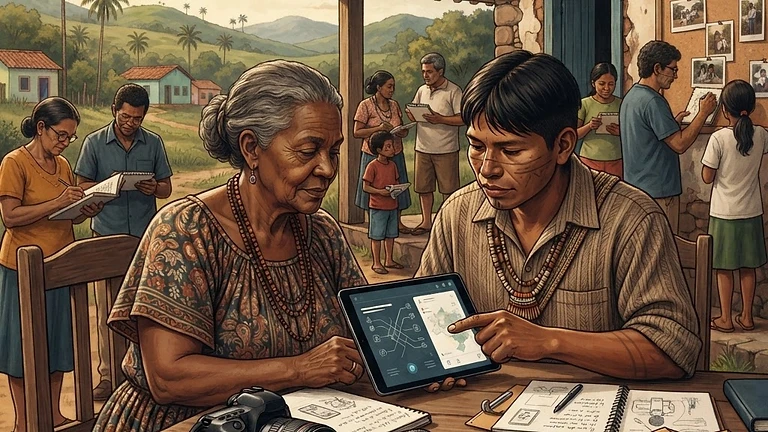
Echoes of Resilience: Mapping Brazil’s Living Traditions: AI-generated editorial illustration for NATION CONTINUITY.
The Shift Toward Community-Led Documentation
In the vast cultural landscape of Brazil, the safeguarding of intangible heritage—encompassing music, dance, and collective memory—has transitioned from top-down administrative models to community-based action. Drawing on methodologies supported by UNESCO’s framework for intangible cultural heritage, local groups are identifying the traditions most vulnerable to the pressures of modernization, such as technological shifts and rural-to-urban migration.
Methodologies of Safeguarding
The practice of community-based documentation, recognized globally for its role in maintaining cultural viability, allows practitioners to define the parameters of their own heritage. According to UNESCO research, when communities lead the inventory process, they ensure that the interpretation of their traditions remains accurate and reflective of lived reality, rather than static museum pieces. In Brazil, this involves oral history interviews, digital archiving of musical repertoires, and the mapping of dance practices that are deeply tied to specific geographic and social contexts.
Navigating Modernization


Modernization often threatens the transmission of knowledge between generations, particularly when younger populations move away from traditional centers. Community documentation projects serve as a bridge, utilizing modern recording technologies to preserve the nuanced nuances of regional dances and musical rhythms. These archives do not replace the practice itself but provide a repository that empowers younger generations to engage with their history. Similar to projects in Mongolia and the Philippines, these Brazilian initiatives emphasize that heritage is not immutable; it evolves, and documenting its current state is a vital step in its future resilience.
Differing Perspectives on Heritage Policy
While community-based inventorying is widely praised for its inclusivity, some scholars and community leaders note a potential tension: the risk of 'freezing' a culture through over-documentation. There is an ongoing debate regarding how to balance the need for records with the organic, fluid nature of traditional arts. For many Brazilian communities, the goal is not to preserve a singular, fixed version of a tradition, but to establish a framework that honors the living, changing nature of their expressions.
Sources
- UNESCO Intangible Cultural Heritage (UNESCO), 2026: Community-based documentation contributes to the viability of intangible cultural heritage in the Philippines.
- UNESCO Intangible Cultural Heritage (UNESCO), 2022: Reviving worshipping practices of sacred sites in Mongolia.
UNESCO Intangible Cultural Heritage — Community-based documentation contributes to the viability of intangible cultural heritage in the Philippines; UNESCO Intangible Cultural Heritage — Reviving worshipping practices of sacred sites in Mongolia
The NATION CONTINUITY Editorial Desk produces AI-assisted editorial content — research, drafting and media generated under the publication's source, quality and discovery standards, then reviewed before publication.