Preserving the Craft: Safeguarding Romani Intangible Heritage in Poland
Traditional Romani crafts are shifting from daily livelihoods to essential cultural markers, supported by new archival and exhibition strategies.
- Traditional Romani crafts like blacksmithing and basketry are essential components of intangible cultural heritage.
- Industrial shifts have led to a decline in the practice of traditional Romani professions in Poland.
- Documentary film serves as a method to capture and preserve the knowledge transfer of traditional crafts.
- Museum exhibitions help provide context to Romani material objects and combat social stereotypes.
- The Council of Europe identifies Romani professional history as a key element of cultural identity.
- Safeguarding strategies now focus on both archival records and the active participation of Romani communities.
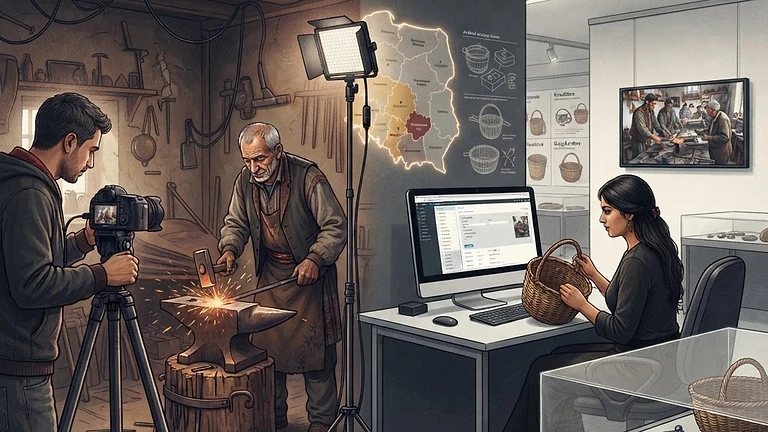
Preserving the Craft: Safeguarding Romani Intangible Heritage in Poland: AI-generated editorial illustration for NATION CONTINUITY.
The Evolution of Romani Traditional Crafts
For generations, specific crafts such as blacksmithing, basketry, and metalwork served as both economic pillars and distinct cultural markers for many Romani groups in Poland. According to the Council of Europe, these professions are not merely historical economic activities but are vital components of intangible cultural heritage that define identity and social cohesion. As industrialization and changing economic landscapes have led to the decline of these traditional trades, the focus has shifted toward safeguarding the knowledge, techniques, and social practices associated with them.
Documentary Film and Archival Preservation
Modern safeguarding policies have increasingly relied on documentary film and digital archives to capture the nuances of these crafts. By recording the pedagogical process—the way knowledge is passed from elders to younger generations—institutions are creating instructional media that serves as a living record. This transition from oral and practical transmission to documentary evidence allows for the preservation of specialized techniques that might otherwise disappear, ensuring that the history of these practices remains accessible for future study and appreciation.
Museums and Public Engagement


Beyond digital archives, museum exhibitions are playing a critical role in bringing Romani intangible heritage to a broader audience. These exhibitions function as a space where material objects, such as forged iron tools or hand-woven baskets, are contextualized within the social and cultural history of the communities that produced them. By highlighting the craftsmanship involved, these institutions help combat stereotypes and promote a deeper understanding of the diverse contributions made by Romani people to the cultural landscape of Poland.
The Future of Heritage Transmission
While institutional efforts are significant, experts acknowledge the complexity of maintaining living heritage. The Council of Europe notes that the success of these initiatives depends heavily on the active participation of the Romani communities themselves. Safeguarding is not a static act of archiving the past but a process of facilitating the continued relevance of these crafts. As these practices evolve, the integration of new media remains a key strategy for keeping the dialogue between tradition and modernity open, ensuring that the cultural memory associated with these professions continues to inform contemporary Romani identity.
Sources
- Council of Europe: Romani professions as important elements of intangible heritage (2019).
Council of Europe — Romani professions as important elements of intangible heritage
The NATION CONTINUITY Editorial Desk produces AI-assisted editorial content — research, drafting and media generated under the publication's source, quality and discovery standards, then reviewed before publication.