The Silent Language: Continuity in the Kutiyattam Tradition
Deep within the kuttampalams of Kerala, a 2,000-year-old theatrical practice continues to evolve through rigorous apprenticeship and shared knowledge.
- Kutiyattam is a 2,000-year-old theatrical tradition.
- Training in Kutiyattam requires 10-15 years of rigorous practice.
- Performance manuals for this tradition were historically secret family property.
- The art form utilizes a codified language of eye expressions and hand gestures.
- Kutiyattam performances are traditionally linked to sacred temple architecture known as kuttampalams.
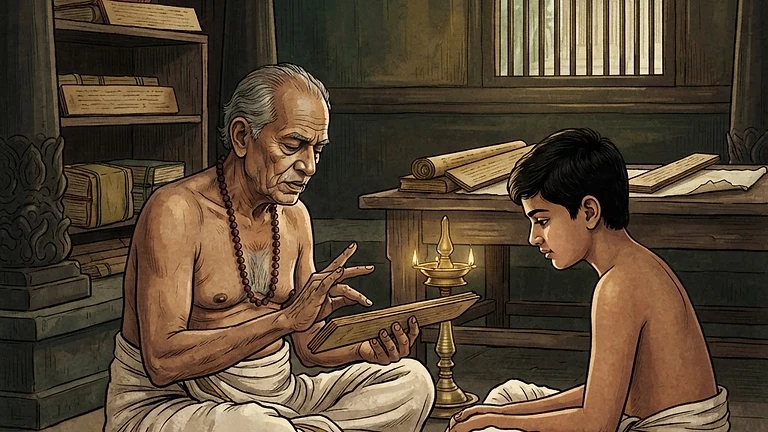
The Silent Language: Continuity in the Kutiyattam Tradition: AI-generated editorial illustration for NATION CONTINUITY.
The Living Pulse of Ancient Theatre
Kutiyattam stands as one of India's oldest living theatrical traditions, with origins tracing back approximately 2,000 years according to UNESCO records. Unlike contemporary theatre that relies heavily on spoken dialogue, Kutiyattam is defined by a highly codified language of eye expressions and intricate hand gestures. These performances are traditionally housed within the specific architecture of kuttampalams, or temple theatres, which serve as the physical vessels for this art form.
The Apprenticeship Model
The transmission of this complex craft is an intensive undertaking. Aspiring practitioners undergo a rigorous apprenticeship that spans 10 to 15 years of dedicated study. This long-form education ensures that the nuances of the performance—ranging from the precise control of facial muscles to the rhythmic movements of the body—are deeply embodied by the performer. This pedagogical model remains central to the continuity of the practice, emphasizing physical discipline as much as the preservation of aesthetic memory.

Transitioning Knowledge
Historically, the technical manuals governing these performances were held as secret family property, restricted to specific clans who acted as the custodians of the tradition. However, the nature of this custody is transforming. In recent decades, these private documents have increasingly entered the public sphere through community-led preservation efforts. While historically guarded within closed circles, the shifting landscape of intangible heritage protection has facilitated a transition where these manuals contribute to a broader communal memory. This evolution reflects the adaptive nature of intangible cultural practices as they navigate the balance between traditional privacy and modern institutional support. The focus remains on maintaining the integrity of the performance while ensuring that the knowledge base is accessible to future generations of practitioners, moving away from exclusive family ownership toward a more collaborative safeguarding approach.
Sources
- UNESCO (2022). Intangible India! A celebration of the country's incredible intangible cultural heritage.
- Press Information Bureau, Government of India (2025). Sacred Stages: Traditional Ritual Theatres of India.
UNESCO — Intangible India! A celebration of the country's incredible intangible cultural heritage; Press Information Bureau, Government of India — Sacred Stages: Traditional Ritual Theatres of India
The NATION CONTINUITY Editorial Desk produces AI-assisted editorial content — research, drafting and media generated under the publication's source, quality and discovery standards, then reviewed before publication.