The Kafana Diplomacy: How Serbian Fraternal Societies Built a Transatlantic Bridge
Long before formal state-to-state treaties, the humble kafana served as the crucible for Serbian-American institutional identity.
- The Amerikanski Srbobran has served as a central publication for the Serbian-American community for over 120 years.
- Early Serbian fraternal societies in the U.S. provided essential social protections like death benefits in the absence of state programs.
- The kafana functioned as a primary hub for organization and community identity during the early 1880s-1930s migration wave.
- Current Serbian diaspora policy involves mapping and engagement efforts coordinated by organizations like the ICMPD.
- The Returning Point initiative represents the modern evolution of diaspora-homeland institutional cooperation.

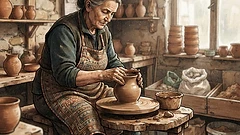
The Kafana Diplomacy: How Serbian Fraternal Societies Built a Transatlantic Bridge: editorial illustration for NATION CONTINUITY.
The Crucible of Community
In the late 19th and early 20th centuries, the arrival of Serbian immigrants in industrial hubs like Chicago was defined not by state coordination, but by the formation of local fraternal societies. As documented in studies on the Serbian great migration (University of Arizona, 2013), these organizations often coalesced around the kafana—a traditional establishment that functioned as a vital community nexus. These spaces provided more than social interaction; they served as the foundation for institutional identity during periods when the Serbian homeland faced significant geopolitical volatility.
The Printed Word as Infrastructure
Central to this institutional building was the publication of Amerikanski Srbobran, which has maintained its role for over 120 years (Library of Congress, 2026). This publication did more than report news; it functioned as a cohesive force that bridged the geographical divide between the diaspora and the Balkans. By standardizing communication, these societies established a template for mutual aid that persisted long after the initial waves of migration.
Diplomatic Continuity and Social Protection
Modern research highlights that diaspora engagement is not a contemporary invention but a continuation of early protective networks (Springer Nature, 2020). Historical fraternal organizations created systems of mutual support, such as sickness and death benefits, which operated as a private form of social protection when state-level interventions were absent. This autonomous infrastructure proved critical during the 20th century as institutional ties between the diaspora and Serbia shifted in response to changing governmental regimes.


Mapping Modern Engagement
Contemporary efforts to bridge these gaps demonstrate a shift from ad-hoc fraternalism to systematic institutional partnership. According to the ICMPD (2023), Serbia has actively worked to map and engage its global diaspora, acknowledging that these networks are essential for national development. Initiatives like the Returning Point program (UNDP, 2023) utilize this long-standing foundation to foster professional and economic collaboration, moving beyond the fraternal models of the 1880s into a framework of integrated knowledge transfer.
Limitations and Evolving Dynamics
While these organizations built a powerful bridge, they were not without limitations. Early fraternal societies were primarily regional in focus, occasionally struggling to represent the broader, heterogeneous Serbian identity across the United States (Library of Congress, 2024). Furthermore, the transition from fraternal social support to modern state-diaspora policy remains a complex process, as interests of the diaspora do not always align perfectly with the bureaucratic requirements of the home state.
Conclusion
The history of the Serbian-American experience confirms that the diaspora is not a periphery, but a core component of national continuity. From the informal diplomacy of the turn-of-the-century kafana to the structured institutional engagement of the 21st century, these societies have proven that identity persists through persistent, organized effort. Understanding this evolution is essential to interpreting the current trajectory of Serbian global engagement.
Sources & Further Reading
- Springer Nature: Diaspora Policies, Consular Services and Social Protection for Serbian Citizens Abroad (2020).
- ICMPD: Diaspora engagement mapping SERBIA (2023).
- UNDP: How Returning Point is building bridges between Serbia and its diaspora (2023).
- Library of Congress: Serbian American General Resources (2024).
- University of Arizona: The Serbian great migration: Serbs in the Chicago region, 1880s to 1930s (2013).
- Library of Congress: Amerikanski Srbobran: Publishing for Over 120 Years (2026).
All historical claims regarding migration patterns and fraternal organization impact are derived from the University of Arizona study on the Chicago region (2013) and Library of Congress archival documentation on Serbian-American publications.
The NATION CONTINUITY Editorial Desk produces AI-assisted editorial content — research, drafting and media generated under the publication's source, quality and discovery standards, then reviewed before publication.