Preserving the Living Timber: Japan's Architectural Craftsmanship
The transmission of master-level techniques for conserving Japan's wooden architecture ensures that ancient structures remain functional and culturally relevant today.
- Traditional skills for the conservation of wooden architecture in Japan are recognized as UNESCO Intangible Cultural Heritage.
- The preservation of these structures relies on specialized knowledge passed through apprenticeship systems.
- Japanese architectural conservation focuses on the use of traditional tools and complex joinery rather than modern adhesives.
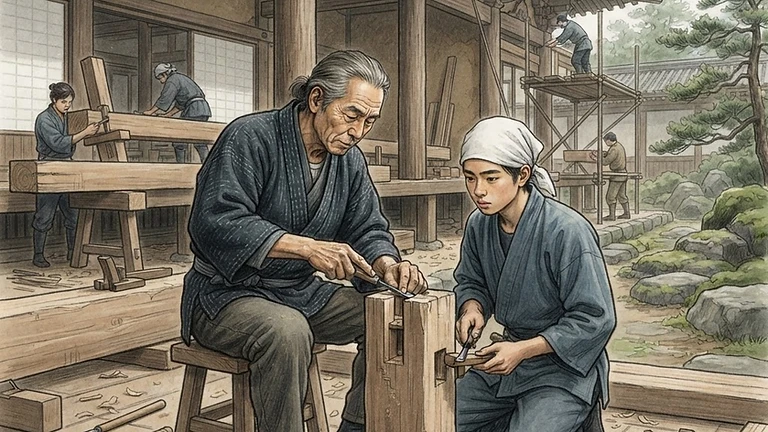
Preserving the Living Timber: Japan's Architectural Craftsmanship: AI-generated editorial illustration for NATION CONTINUITY.
The Architecture of Continuity
The conservation of Japan's wooden architecture is not merely an act of building maintenance; it is a profound exercise in cultural continuity. These structures, often composed of organic materials prone to decay, require specialized interventions that have been refined over centuries. Central to this process is the transmission of traditional skills, techniques, and knowledge, which are officially recognized by UNESCO as vital Intangible Cultural Heritage.
The Transmission of Mastery
The mastery required to maintain structures—ranging from private residences to elaborate temple complexes—is passed down through established systems of apprenticeship. Unlike industrialized construction, this work relies on the deep understanding of wood's properties, traditional tool use, and complex joinery that avoids modern adhesives. Master craftspeople serve as mentors, guiding the next generation in the subtle art of identifying timber quality, moisture content, and the specific needs of diverse architectural styles.

Safeguarding and Evolving Knowledge
While the goal is to maintain the integrity of historic buildings, the practice is inherently evolving. Craftspeople must adapt traditional knowledge to contemporary safety requirements and the availability of materials. This living heritage thrives precisely because it is flexible, responding to environmental changes and the ongoing needs of the communities that inhabit these spaces. Safeguarding these skills ensures that the memory embedded in the architecture remains accessible to future generations, balancing preservation with the realities of modern use.
Sources
- Japan - UNESCO Intangible Cultural Heritage, UNESCO (2025): https://ich.unesco.org/en/state/japan-JP?info=elements-on-the-lists
UNESCO — Japan - UNESCO Intangible Cultural Heritage
The NATION CONTINUITY Editorial Desk produces AI-assisted editorial content — research, drafting and media generated under the publication's source, quality and discovery standards, then reviewed before publication.