Hanami
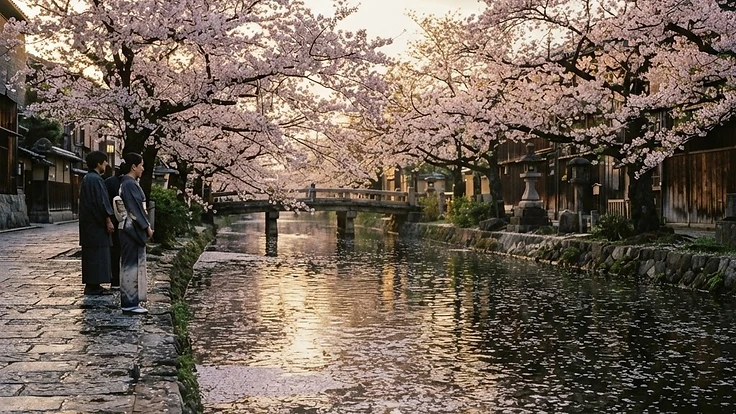
Hanami is the Japanese tradition of viewing and celebrating the seasonal blooming of cherry blossoms. It is simultaneously a popular social event, a seasonal marker and a cultural image with centuries of artistic associations. Families, friends and colleagues gather under blossoming sakura trees in parks and along riverbanks to picnic, reflect and mark the passing of spring. The brevity of the blossom has long carried poetic associations with impermanence. Hanami illustrates how a seasonal ritual can structure everyday social life even as its meaning evolves, and how cultural continuity lives in repeated shared practice rather than in objects alone.
Explanation
Hanami gatherings take place in late March and April as cherry trees bloom across Japan. The practice is documented in literature from at least the Heian period and remains one of the most widely shared seasonal customs in the country.
Origin & History
Hanami has roots in courtly picnics of the Heian period and was later popularised across society during the Edo era.
Why It Matters
Hanami shows how seasonal rituals sustain shared cultural memory and social cohesion across generations.
Living Practice Today
Millions of Japanese people take part in hanami each spring, and the tradition is followed through forecasts that track the blossom front northward.
Agency for Cultural Affairs Japan; Japan National Tourism Organisation.