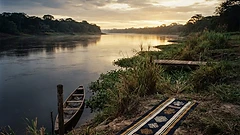
The Guarania: A Living Echo of the Paraguayan Spirit
Exploring the evolution and social significance of the Guarania, a musical genre that harmonizes the Guaraní language with the rhythms of modern community life.
- The Guarania originated in the early 20th century in Paraguay.
- The genre is defined by a slow tempo and specific syncopated rhythms.
- The use of the Guaraní language is a core component of the genre.
- It is recognized by UNESCO as a vital element of daily life, family environments, and community identity.
- The Guarania is considered a living tradition that evolves through community usage.
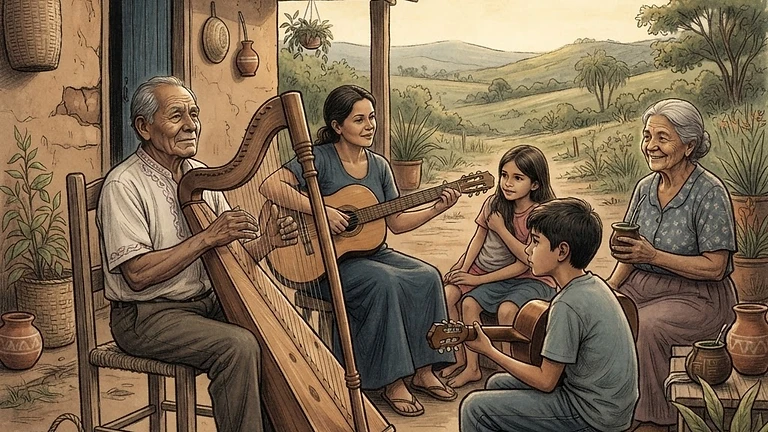
The Guarania: A Living Echo of the Paraguayan Spirit: AI-generated editorial illustration for NATION CONTINUITY.
Defining the Guarania
The Guarania is more than a mere musical genre; it is a profound expression of Paraguayan cultural identity. Developed in the early 20th century, the form is characterized by its distinctively slow, melancholic tempo and its heavy reliance on syncopation. Unlike other regional styles that rely solely on instrumental expression, the Guarania is inextricably linked to the use of the Guaraní language, a bridge between the nation's indigenous heritage and its evolving modern identity.
A Social Fabric of Sound
According to UNESCO, the Guarania serves as a foundational component of daily life. It is not confined to concert halls or professional recordings but exists primarily within the domestic and communal spheres. Families and local groups often employ the genre as a vehicle for shared memory and affective expression. By weaving native musical elements with popular structures, practitioners ensure that the genre remains a living, flexible tradition that shifts alongside the community it serves.

Heritage and Transmission
The persistence of the Guarania relies on its ability to transcend formal borders and remain relevant to current generations. Because it is deeply rooted in the social practices of individuals, its transmission is largely horizontal—passed between families and neighbors rather than strictly through formal academic institutions. While it is often described as a 'sound of the soul,' scholars emphasize that this is a collective reflection of social history rather than an immutable static trait of every individual within the region. It stands as an evolving, multi-faceted practice that mirrors the complexity of the communities that sustain it.
Sources
- UNESCO: Guarania, sound of Paraguayan soul. https://ich.unesco.org/en/RL/guarania-sound-of-paraguayan-soul-02128
UNESCO — Guarania, sound of Paraguayan soul
The NATION CONTINUITY Editorial Desk produces AI-assisted editorial content — research, drafting and media generated under the publication's source, quality and discovery standards, then reviewed before publication.