The Rhythms of Resonance: Furyu-odori and Japanese Community Life
Across Japan, local ritual dances known as Furyu-odori function as a vital, evolving medium for communities to express collective aspirations and maintain cultural continuity.
- Furyu-odori is officially recognized as an element of Intangible Cultural Heritage in Japan.
- These ritual dances act as a medium for local communities to express collective hopes and prayers.
- The practice is not homogeneous, manifesting in diverse regional forms across Japan.
- Furyu-odori functions as a living tradition that evolves alongside contemporary community life.
- These performances serve to strengthen social bonds and transmit local cultural knowledge.
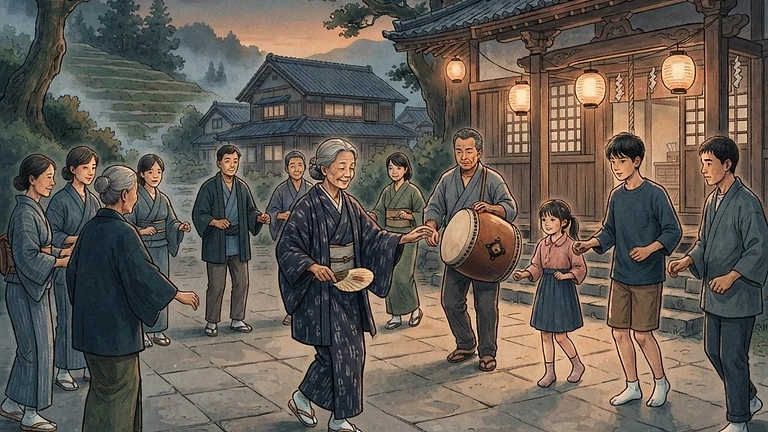
The Rhythms of Resonance: Furyu-odori and Japanese Community Life: AI-generated editorial illustration for NATION CONTINUITY.
The Essence of Furyu-odori
In various regions of Japan, communities engage in a tradition of ritual performance known collectively as Furyu-odori. These dances are far from static, monolithic displays; rather, they serve as a dynamic mechanism through which local groups express their specific collective hopes and communal prayers. According to UNESCO, which recognizes these practices as part of Japan's Intangible Cultural Heritage, Furyu-odori serves as a profound expression of local identity, deeply embedded in the social fabric of the communities that perform them.
A Medium for Communal Expression
The term 'Furyu' implies a sense of elegance or visual flair, but in the context of these rituals, it denotes the effort to create something extraordinary to express gratitude or supplication. Participants often use elaborate costumes, musical accompaniment, and distinct dance steps that have been handed down through generations. These performances are not just historical enactments; they are living practices where the act of dancing itself creates a space for collective reflection. By performing in festivals and civic gatherings, community members reinforce their bonds and transmit local knowledge, ensuring that these artistic expressions remain relevant to the contemporary generation.


Transmission and Cultural Evolution
The transmission of Furyu-odori is facilitated by local institutions and family networks that prioritize the maintenance of these traditions. Rather than serving as a singular nationalized art form, each local iteration of Furyu-odori is distinct, reflecting the history and specific challenges of its region. Researchers note that these dances act as a living archive, where the memory of past community resilience is preserved through rhythmic motion and song. The evolution of these practices illustrates that culture is an active process—constantly adapted to fit the changing social landscapes of modern Japan while remaining rooted in the shared intentions of the practitioners.
Sources
- UNESCO. (2025). Japan - UNESCO Intangible Cultural Heritage. Retrieved from https://ich.unesco.org/en/state/japan-JP?info=elements-on-the-lists. This source identifies Furyu-odori as a recognized element of Intangible Cultural Heritage characterized by ritual dances imbued with the hopes and prayers of the local people.
UNESCO — Japan - UNESCO Intangible Cultural Heritage
The NATION CONTINUITY Editorial Desk produces AI-assisted editorial content — research, drafting and media generated under the publication's source, quality and discovery standards, then reviewed before publication.