Echoes of the Desert: The Evolution of Kalbelia Performance Art
Once nomadic snake charmers, the Kalbelia community of Rajasthan now sustains its cultural legacy through the global stage of music and dance.
- Kalbelia community songs and dances reflect their historical snake-handling heritage.
- Performances are passed down orally across generations within the community.
- Kalbelia performances have become integral to the group's identity amid societal changes.
- The transition reflects an adaptation from nomadic life to contemporary performance arts.
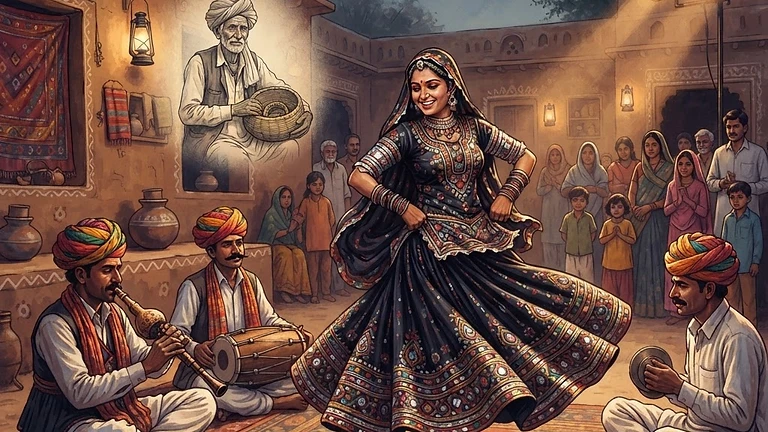
Echoes of the Desert: The Evolution of Kalbelia Performance Art: AI-generated editorial illustration for NATION CONTINUITY.
The Transition of a Nomadic Legacy
For generations, the Kalbelia community of Rajasthan, often referred to as the snake charmers of the Thar Desert, maintained a nomadic lifestyle deeply intertwined with their expertise in handling venomous reptiles. According to the Ministry of Culture, Government of India, the community's traditional songs and dances are not merely aesthetic performances; they are rooted in the specific ecological and historical knowledge of their snake-handling past [1]. As the community transitioned away from their traditional vocation due to changing environmental laws and socio-economic shifts, these arts became the primary vessel for maintaining their distinct cultural identity.
The Oral Transmission of Artistry
The persistence of the Kalbelia performance tradition relies on oral transmission. Because there are no formal manuscripts documenting the intricate movements of their dance or the lyrics of their songs, these practices are passed down through generations within families [1]. This ensures that while the context of the performance has evolved—moving from intimate desert gatherings to public festival stages—the essence of the art form remains connected to the community's ancestral experiences. The Press Information Bureau notes that these performances are now considered integral to the Kalbelia's contemporary identity, serving as a social bridge in a rapidly modernizing Indian society [2].


Preserving Heritage in a Changing Society
The transformation of the Kalbelia from nomadic snake charmers to professional dancers demonstrates a nuanced approach to heritage safeguarding. By formalizing their oral traditions into rhythmic dances—characterized by the iconic black skirts and undulating movements that mimic the serpent—the community has successfully repositioned itself within the national cultural economy. This evolution is not a abandonment of the past, but an active adaptation. As noted by the Ministry of Culture, the performance acts remain a living reflection of their heritage, providing a tangible way for the community to assert their place in a changing environment [1, 2].
Sources
- Intangible Cultural Heritage, Ministry of Culture, Government of India (2026): https://culture.gov.in/intangible-cultural-heritage
- Intangible Cultural Heritage of India Beyond Monuments and Landscapes, Press Information Bureau (2024): https://static.pib.gov.in/WriteReadData/specificdocs/documents/2024/jul/doc2024715349801.pdf
Ministry of Culture, Government of India — Intangible Cultural Heritage; Press Information Bureau, Government of India — Intangible Cultural Heritage of India Beyond Monuments and Landscapes
The NATION CONTINUITY Editorial Desk produces AI-assisted editorial content — research, drafting and media generated under the publication's source, quality and discovery standards, then reviewed before publication.