The Architecture of Reconciliation: Mapping Serbia's Cross-Border Cultural Infrastructure
Beyond political rhetoric, how do physical cultural institutions and shared heritage sites function as the true connective tissue between Serbia and its neighbors?
- The 2019 Council of Europe report identifies decentralized cultural infrastructure as a key component of sustainable peace-building in Serbia [1].
- The DKMT Euroregion serves as a model for using site-specific cultural projects to create stable 'corridors of cooperation' [6].
- European Commission 2022 financing for Serbia-BiH cross-border programs prioritizes hard-asset cultural preservation over soft-power projects [3].
- UNESCO's 2022 report highlights Serbia's formalization of cross-border cultural directives within its national legislative framework [2].
- Disparate funding cycles and administrative speeds are cited as primary barriers to effective cross-border heritage protection [5].
- Administrative capacity gaps in Serbia hinder the full utilization of complex EU-funded regional development instruments [1].
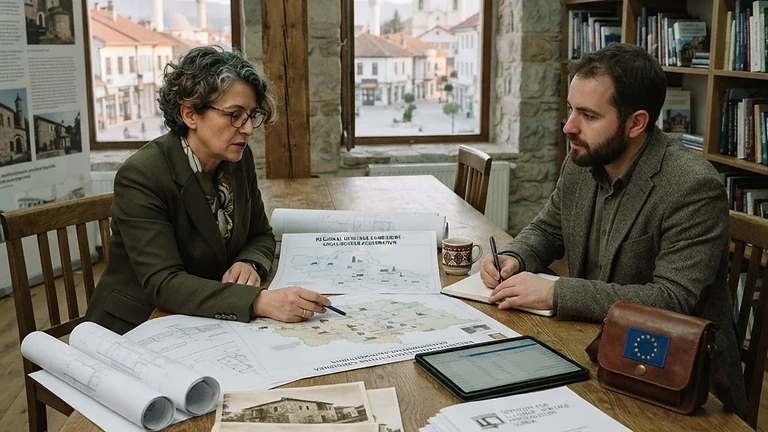
The Architecture of Reconciliation: Mapping Serbia's Cross-Border Cultural Infrastructure: editorial illustration for NATION CONTINUITY.
The Institutional Framework of Shared Heritage
Geopolitical stability is often tethered to the tangible, brick-and-mortar reality of cultural diplomacy. According to the 2019 Council of Europe Cultural Policy Peer Review of Serbia, the sustainability of regional peace-building is rooted in the maintenance of decentralized cultural infrastructure [1]. Rather than relying on fleeting diplomatic rhetoric, the operational framework of cross-border cooperation utilizes institutional regionalism to anchor regional stability. The Serbian Ministry of Culture integrates these structures to align national policies with Council of Europe standards, as documented in the Herein System framework [4].
The Danube-Criș-Mureș-Tisa (DKMT) Model
Data from the West University of Timișoara indicates that projects anchored in specific geographic zones, such as the Danube-Criș-Mureș-Tisa (DKMT) Euroregion, provide greater stability dividends than ephemeral cultural events [6]. These institutionalized links facilitate shared heritage management and public infrastructure upgrades serving populations on both sides of the border. Researchers from the West University of Timișoara emphasize that these localized hubs create corridors of cooperation less susceptible to the volatility of central government fluctuations [6]. By focusing on site-specific sustainability, these projects mitigate the friction often found in national identity politics.
Financing and Cross-Border Coordination Mechanisms


Financial commitment functions as a primary metric for regional integration. The European Commission’s 2022 financing decision for the cross-border programme between Serbia and Bosnia and Herzegovina prioritized hard-asset development in cultural preservation over softer initiatives [3]. This funding model necessitates rigorous inter-state cooperation in auditing and project management, mandating sustained administrative communication between Serbian and Bosnian institutions. Furthermore, the 2022 UNESCO Quadrennial Periodic Report notes that Serbia has formalized these cross-border directives within its national legislative framework to better satisfy international sustainable development goals [2].
Institutional Resilience and Digital Heritage Integration
The Herein System, a tool for heritage management across Europe, demonstrates an increasing reliance on shared, digitized databases [4]. This digital architecture permits collaborative restoration efforts that require standardized technical cooperation between Serbian state institutions and neighboring nations. However, Science International Journal reports that these initiatives face developmental hurdles, primarily due to disparate funding cycles and inconsistent administrative speeds across neighboring jurisdictions [5]. Despite these challenges, the institutionalization of heritage protection acts as a buffer against political volatility by establishing technical standards that transcend borders [5].
Administrative Capacity and Structural Limitations
Despite the efficacy of infrastructure-based cooperation, structural limitations persist. The 2019 Council of Europe Peer Review indicates that internal cultural policy in Serbia often lacks the administrative capacity to fully utilize the benefits provided by complex EU-funded regional instruments [1]. A distinct gap remains between large-scale urban centers, which attract the majority of institutional investment, and rural heritage sites requiring localized support. As noted by the West University of Timișoara, without consistent administrative alignment, regional projects risk becoming isolated silos of development rather than functioning as holistic engines for broader social integration [6].
Future Trajectories for Regional Cultural Diplomacy
The architecture of reconciliation in the Balkans is increasingly decentralized, relying on physical infrastructure and shared administrative frameworks. By focusing on site-based cultural projects within the DKMT and other regional networks, Serbia and its neighbors are building a durable, operational foundation. The persistence of these initiatives suggests that long-term regional stability is best secured through the maintenance of shared institutional frameworks and the physical preservation of transboundary heritage sites. Continued integration of these processes into national policy will determine whether these projects function as lasting stabilizers or remain isolated developmental zones [1].
Sources comprise peer-reviewed cultural policy assessments, EU financing decisions, UNESCO legislative reports, and academic research on regional cross-border cooperation in the Balkans.
The NATION CONTINUITY Editorial Desk produces AI-assisted editorial content — research, drafting and media generated under the publication's source, quality and discovery standards, then reviewed before publication.