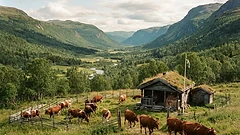
Summer Farming: The Living Heritage of Fäbod and Seter
A deep dive into the transhumance practices of Sweden, where centuries-old pastoral traditions meet contemporary cultural identity.
- Summer farming at fäbod and seter is inscribed on the UNESCO Representative List of the Intangible Cultural Heritage of Humanity.
- The practice requires specialized knowledge of animal husbandry, dairy production, and sustainable land management.
- Herding calls and traditional songs are essential elements of the fäbod and seter social and working environment.
- The tradition has served as a primary source of inspiration for Swedish literature and visual arts.
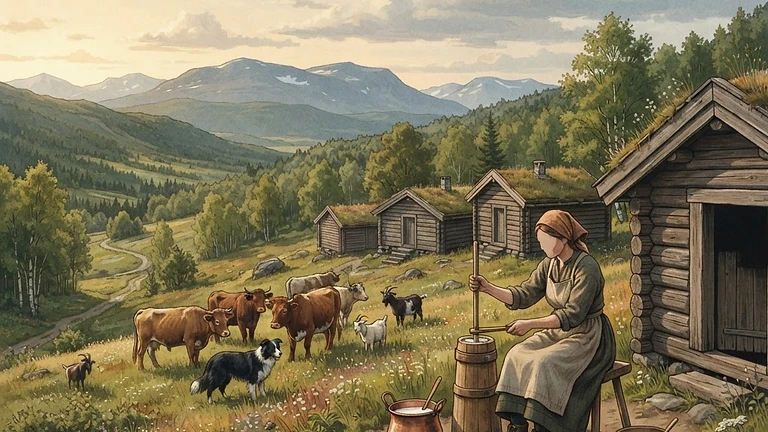
Summer Farming: The Living Heritage of Fäbod and Seter: AI-generated editorial illustration for NATION CONTINUITY.
The Rhythm of Transhumance
In the landscapes of Sweden, the practice of fäbod and seter represents a specialized form of transhumance—a seasonal migration where livestock are moved to outlying summer pastures. This practice is far more than a rural chore; it is an intricate system of knowledge involving animal husbandry, sophisticated dairy production techniques, and nuanced land management strategies that have evolved over generations. According to UNESCO, this living tradition remains a vital component of cultural heritage, demonstrating how communities interact with their environment to ensure the health of their herds and the sustainability of the land.
An Immaterial Tapestry of Sound and Story
Beyond the practicalities of farming, the fäbod culture is defined by its vibrant immaterial heritage. The UNESCO Intangible Cultural Heritage Committee highlights that the practice is deeply intertwined with a unique repertoire of herding calls, traditional songs, and storytelling rituals. These auditory traditions, often used to communicate with animals over vast distances, have served as a bridge between the practical demands of the farm and the expressive arts. The influence of this pastoral life extends into broader cultural spheres, having served as a rich source of inspiration for Swedish literature, visual arts, and performing arts throughout history.
Evolution of a Tradition


It is crucial to recognize that the fäbod and seter lifestyle is not a static relic of the past, but an evolving practice. While the core knowledge—such as the creation of traditional dairy products and the use of acoustic communication—is rooted in long-standing historical techniques, the practitioners of today adapt these methods to meet modern ecological and economic realities. The safeguarding of this intangible heritage involves not just the preservation of physical structures or artifacts, but the continued transmission of the social rituals and technical skills that keep the practice alive within modern Swedish communities.
Perspectives on Safeguarding
As the Representative List of the Intangible Cultural Heritage of Humanity continues to highlight, the primary goal of documenting fäbod and seter is to ensure that the knowledge transmission pipeline remains intact. Scholars and community practitioners alike note that while the practice has faced pressures from urbanization and changing agricultural models, the collective memory tied to the fäbod remains a potent symbol of regional identity and ecological stewardship. By maintaining these traditions, practitioners preserve a unique cultural lens through which they interpret their relationship with the natural world.
Sources
- UNESCO (2026), Elements on the Lists of Intangible Cultural Heritage, https://ich.unesco.org/en/state/sweden-SE?info=elements-on-the-lists
- UNESCO (2026), Intangible Cultural Heritage Committee 2024, https://www.unesco.org/en/intangible-cultural-heritage/committee-2024
UNESCO Intangible Cultural Heritage — Elements on the Lists of Intangible Cultural Heritage; UNESCO — Intangible Cultural Heritage Committee 2024
The NATION CONTINUITY Editorial Desk produces AI-assisted editorial content — research, drafting and media generated under the publication's source, quality and discovery standards, then reviewed before publication.