The Resonant Evolution of Gnawa Musical Heritage in Morocco
Tracing the path of a centuries-old tradition from private therapeutic rituals to a vibrant, evolving pillar of Moroccan cultural identity.
- Gnawa culture dates back to at least the 16th century according to UNESCO.
- The practice is centered on therapeutic rituals and all-night rhythm ceremonies.
- The number of fraternal groups and master musicians is growing in Morocco.
- Gnawa is characterized as a living heritage that evolves across generations.
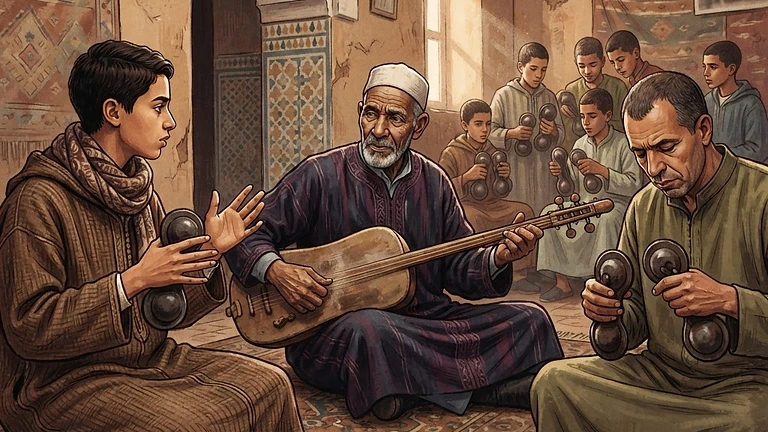
The Resonant Evolution of Gnawa Musical Heritage in Morocco: AI-generated editorial illustration for NATION CONTINUITY.
The Foundations of a Living Tradition
Gnawa culture, which traces its history back to at least the 16th century, functions as a complex intersection of musical performance, oral tradition, and social cohesion. Historically situated within Moroccan society, the tradition is defined by its ability to adapt and persist through generations of practitioners who act as custodians of its distinct rhythms and symbolic language.
Therapeutic Rituals and Night-long Ceremonies
At the heart of the Gnawa tradition are the therapeutic rituals known as lila. These events involve all-night rhythm ceremonies designed to facilitate a communal experience of healing and spiritual reflection. These performances are not static spectacles; they are lived experiences that require a high degree of technical mastery and deep understanding of the sonic landscape. The musicians, led by a Maâlem or master musician, employ specific instruments—most notably the gimbri and metal castanets known as krakebs—to structure the atmosphere of the gathering.
The Contemporary Growth of a Community

In modern Morocco, the demographic and institutional landscape of this heritage is shifting. According to documentation by UNESCO, there is a measurable expansion in the number of fraternal groups and master musicians dedicated to the transmission of this art. This growth suggests that rather than becoming a relic of the past, the practice is gaining new adherents who seek to integrate these ancient modes of expression into contemporary Moroccan life. The preservation of this intangible heritage relies on the active participation of these diverse fraternal groups, who navigate the balance between traditional methodology and the evolving demands of the 21st century.
Cultural Agency and Safeguarding
The transmission of Gnawa music occurs largely through apprenticeship and community-led instruction, highlighting the importance of living transmission over mere archival preservation. While the tradition has gained visibility on international stages, the primary locus of the culture remains the local communities who maintain the integrity of the rituals. By documenting these practices, the focus remains on the practitioners as active agents of their own cultural evolution, ensuring that the legacy of their forebears continues to find relevance in new contexts.
Sources
- Gnawa — UNESCO: https://ich.unesco.org/en/RL/gnawa-01170
UNESCO — Gnawa
The NATION CONTINUITY Editorial Desk produces AI-assisted editorial content — research, drafting and media generated under the publication's source, quality and discovery standards, then reviewed before publication.