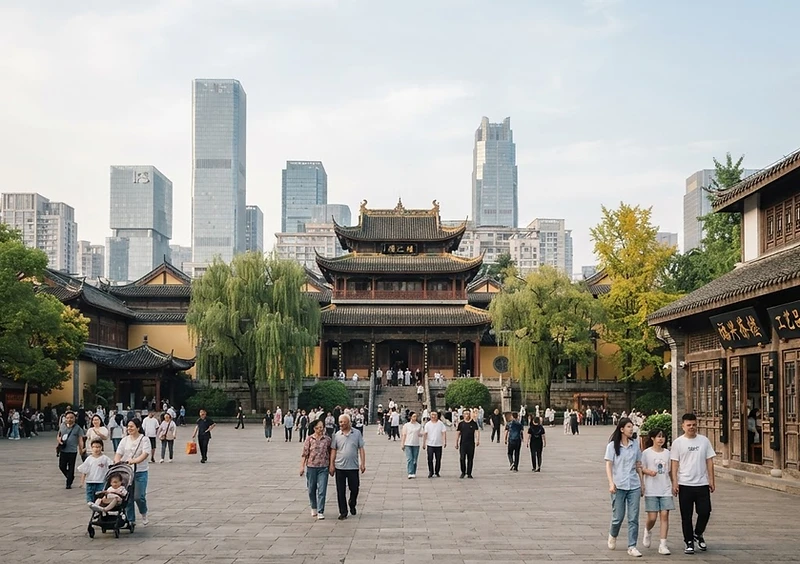
China
China is one of the world's most consequential experiments in large-scale national identity. The state officially recognises 56 ethnic groups while promoting a common Chinese national identity through the concept of Zhonghua minzu. Standard Mandarin serves as the shared language of education, administration and national communication. The country combines ancient civilisational continuity with rapid modernisation, and now faces a demographic transition marked by population decline and ageing, making cultural continuity inseparable from family and regional policy.
Officially secular; Buddhism, Christianity, Islam and Taoism present among the population.
China — 中国, Zhōngguó, formally the People's Republic of China — is a state of fifty-six officially recognised ethnic groups, among them the Han majority and the Zhuang, Hui, Uyghur, Tibetan, Mongolian, Korean, Miao and Yi peoples. Standard Mandarin (Putonghua) is the national language, while Cantonese (Yue), Hokkien (Minnan), Wu and Shanghainese, Hakka and dozens of others remain living regional tongues. Continuity is carried by Confucian, Daoist and Buddhist inheritances, by the twenty-four solar terms that UNESCO inscribed as intangible heritage, by Spring Festival and the Qingming and Mid-Autumn observances, and by kunqu opera, guqin music, calligraphy, silk and porcelain craft. Lineage halls, county gazetteers and village ritual calendars remain the practical infrastructure through which local tradition is transmitted across generations.
Local names and languages — 中国 · Zhōnghuá Rénmín Gònghéguó · 普通话 Putonghua · 粤语 Cantonese · 闽南语 Hokkien

Stories

China's Model: Building a Common National Identity Across a Vast Multiethnic State
China officially recognises 56 ethnic groups, yet its political model places a common Chinese national identity above narrower regional or ethnic identities.

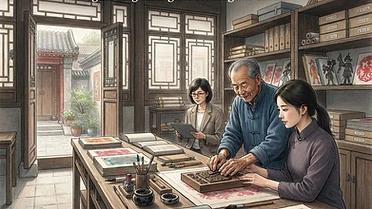
The Architecture of Memory: Safeguarding Intangible Heritage in China
China's legislative approach to intangible cultural heritage seeks to formalize the preservation of diverse traditions while navigating the inherent volatility of living practices.

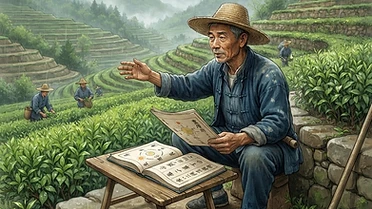
Mapping the Sun: The Living Legacy of the Twenty-Four Solar Terms
Developed through centuries of solar observation, the Twenty-Four Solar Terms remain a vital tool for organizing agricultural tasks and seasonal festivals. This traditional knowledge system persists as a dynamic element of contemporary heritage.

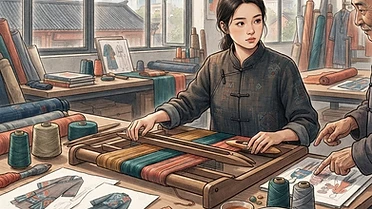
Weaving the Future: China’s New Wave of Heritage Design
Young designers are reimagining traditional Chinese crafts through modern color palettes and sustainable materials, proving that heritage is a living, breathing practice.

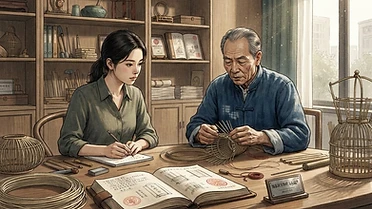
Legislating Living Traditions: The Evolution of China’s Intangible Cultural Heritage
China continues to formalize its approach to intangible cultural heritage through the 2011 national law and active international collaboration. This framework supports thousands of inheritors who sustain the country's diverse living traditions.