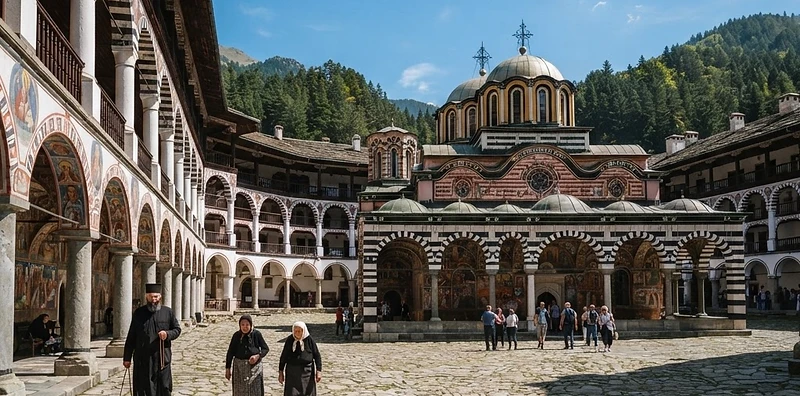
Bulgaria
The EU's fastest-shrinking population, with a strong Orthodox calendar of ritual and a large Turkish-speaking minority.
Local name: България
Recognised regional or minority languages: Turkish, Romani, Armenian
Source labels and dataset codes are those published by the statistical authority named on each row. Figures are reproduced as retrieved, without interpolation.
Bulgaria (България) is a nation located in Southeast Europe, occupying the eastern portion of the Balkan Peninsula. The official language is Bulgarian, while Turkish, Romani, and Armenian are recognised as regional or minority languages under the European Charter for Regional or Minority Languages. The capital and largest city is Sofia. The country is defined by its long-standing cultural continuity, rooted in the preservation of the Cyrillic script, which originated in the First Bulgarian Empire, and the unique tradition of the Chitalishte, a network of community cultural centres that have served as hubs for education and national identity since the 19th century. Demographically, Bulgaria is characterised by a persistent trend of population decline and an ageing society, driven by low fertility rates and significant international migration flows. These structural factors shape the contemporary social landscape, as the state balances the preservation of its rich intangible heritage with the challenges of modern demographic shifts.
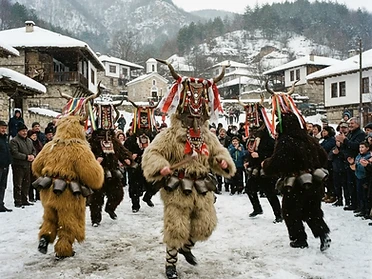
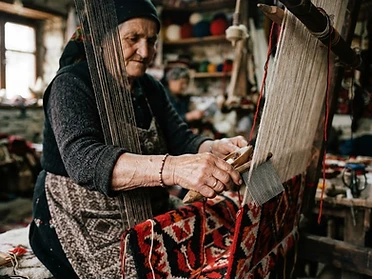
UNESCO Intangible Cultural Heritage: Bistritsa Babi, archaic polyphony, dances and rituals from the Shoplouk region · Nestinarstvo, messages from the past: the Panagyr of Saints Constantine and Helena in the village of Bulgari · The tradition of carpet-making in Chiprovtsi · Surova folk feast in Pernik region · Festival of folklore in Koprivshtitsa: a system of practices for heritage presentation and transmission · Cultural practices associated to the 1st of March · Bulgarian Chitalishte (Community Cultural Centre): practical experience in safeguarding the vitality of the Intangible Cultural Heritage · Visoko multipart singing from Dolen and Satovcha, South-western Bulgaria


Bulgaria in the Atlas


National Strategy for Cultural Development
The strategy outlines the state's commitment to the preservation and promotion of Bulgarian cultural heritage, including intangible practices. It provides a framework for funding community cultural centres and supporting the transmission of traditional skills to younger generations.
- Instrument
- Strategy
- Year
- 2024
- Scope
- Bulgaria national policy