Reviving the Rhythm: Safeguarding Seperu in Chobe
The Veekuhane community and the Botswana government partner to preserve the sacred Seperu folk dance amidst shifting social landscapes.
- The Seperu folk dance was officially inscribed as Botswana's intangible heritage in 2019.
- UNESCO is supporting an eighteen-month safeguarding project for Seperu through international assistance.
- The Seperu tradition involves complex singing, dancing, and sacred rituals specific to the Veekuhane.
- Botswana’s heritage protection is governed by the Monuments and Relics Act of 2001.
- Modern lifestyle shifts are cited as the primary driver for the disruption of traditional knowledge transmission.
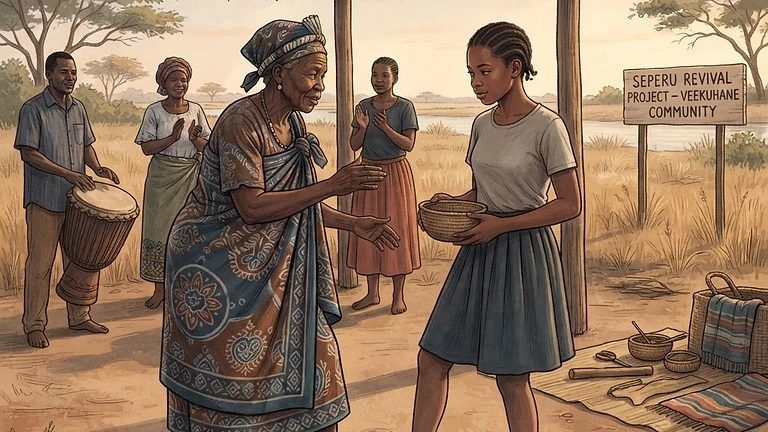
Reviving the Rhythm: Safeguarding Seperu in Chobe: AI-generated editorial illustration for NATION CONTINUITY.
The Sacred Pulse of the Veekuhane
In the Chobe District of Botswana, the Seperu folk dance serves as a profound expression of Veekuhane identity. Far more than a performance, Seperu integrates singing, dancing, and specialized rituals that have historically acted as a social glue for the community. According to the UNESCO Intangible Cultural Heritage records, the practice is deeply embedded in the social fabric, serving as a medium for artistic expression and communal memory.
The Challenge of Transmission
Despite its cultural significance, the transmission of Seperu from elders to youth faces significant hurdles. Modern lifestyle shifts and urbanization have disrupted the traditional spaces where these oral and somatic traditions were historically passed down. UNESCO notes that these modern pressures have undermined the continuity of the dance, creating a generational gap that threatens to silence this unique form of heritage.
A Strategic Safeguarding Initiative

Recognizing the urgency of the situation, the Botswana government has launched a targeted eighteen-month safeguarding project. This initiative, supported by international assistance through UNESCO, aims to document the nuances of the performance and create sustainable frameworks for transmission. This work operates within the broader context of the country’s heritage management, which is anchored by the Monuments and Relics Act of 2001, a legislative pillar that governs the protection of national treasures.
Institutional Recognition and Future Outlook
The importance of this dance was formally acknowledged in 2019 when Seperu was inscribed as part of Botswana's intangible heritage. While the state provides a framework for support, the project emphasizes community-led efforts. As the Veekuhane people continue to adapt their traditions to a contemporary world, the project serves as a bridge, ensuring that the movements and songs of Seperu remain a living, evolving part of the cultural tapestry in the Chobe District rather than a static relic of the past.
Sources
- UNESCO Intangible Cultural Heritage (2023): Decision of the Bureau 18.COM 1.BUR 4.1 regarding international assistance for the Seperu folk dance.
- Confinity Heritage Editorial (2026): Botswana Culture and Heritage: Traditions, citing the 2001 Monuments and Relics Act and the 2019 inscription of Seperu.
UNESCO — Decision of the Bureau: 18.COM 1.BUR 4.1; Confinity — Botswana Culture and Heritage: Traditions
The NATION CONTINUITY Editorial Desk produces AI-assisted editorial content — research, drafting and media generated under the publication's source, quality and discovery standards, then reviewed before publication.