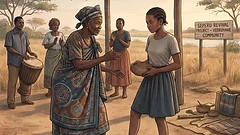
Echoes of the Clay: Preserving the Pottery Traditions of the Bakgatla ba Kgafela
In the villages of south-eastern Botswana, a delicate cycle of transmission is working to keep the ancestral craft of earthenware pottery from fading into history.
- Earthenware pottery-making by the Bakgatla ba Kgafela was inscribed on the UNESCO List of Intangible Cultural Heritage in Need of Urgent Safeguarding in 2012.
- The craft is traditionally transmitted from mother to daughter through observation and direct practice.
- The practice is specifically concentrated within the Bakgatla ba Kgafela community in south-eastern Botswana.
- The decline of master practitioners has necessitated formal intervention to document and maintain the tradition.
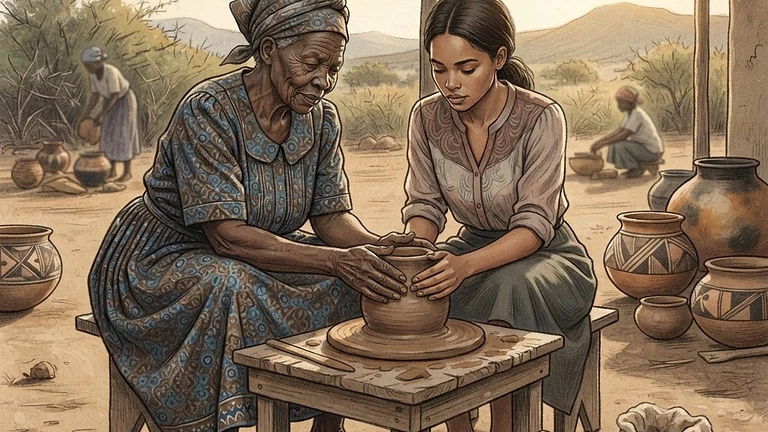
Echoes of the Clay: Preserving the Pottery Traditions of the Bakgatla ba Kgafela: AI-generated editorial illustration for NATION CONTINUITY.
A Legacy Sculpted from Earth
In the quiet corners of south-eastern Botswana, the rhythmic motion of hands shaping clay has long served as a testament to the cultural vitality of the Bakgatla ba Kgafela community. For generations, the craft of earthenware pottery-making has been more than a functional necessity; it is a profound form of heritage that ties the present to the ancestral past. According to UNESCO, this practice was recognized in 2012 for its urgent need for safeguarding, highlighting both its deep cultural value and the contemporary fragility of the art form.
The Chain of Transmission
The survival of this craft relies on a decentralized, intimate model of education. Knowledge is not found in textbooks but is instead encoded in the lived experience of the community. Transmission occurs almost exclusively within the domestic sphere, where mothers teach their daughters and granddaughters the intricate skills required to locate, process, and mold the local clay. This observation-based pedagogy ensures that the specific aesthetic preferences, firing techniques, and structural integrity of the vessels are maintained through shared time and practice.
Navigating Modern Challenges


Despite its rich history, the tradition faces significant hurdles in the 21st century. The demographic of master practitioners is currently in decline, as shifting socio-economic conditions and the availability of modern, mass-produced containers alter the demand for traditional earthenware. The UNESCO safeguarding project focuses on reversing this trend by creating spaces where younger generations can engage with the craft under the guidance of elders. This initiative treats culture not as a static relic, but as an evolving practice that requires active participation to remain relevant.
Looking Toward the Future
The effort to preserve the pottery of the Bakgatla ba Kgafela is part of a broader commitment by the community to ensure that their distinct voice continues to be heard. By documenting these techniques, the community is not merely archiving a dying art, but is actively working to revitalize it as a viable pursuit for modern artisans. The persistence of these skills speaks to the resilience of the community and their dedication to ensuring that the act of shaping clay remains a bridge between the generations of the Bakgatla ba Kgafela.
Sources
- UNESCO: Botswana - UNESCO Intangible Cultural Heritage (https://ich.unesco.org/en/state/botswana-BW?cp=BW&info=projects&topic=en-state)
UNESCO — Botswana - UNESCO Intangible Cultural Heritage
The NATION CONTINUITY Editorial Desk produces AI-assisted editorial content — research, drafting and media generated under the publication's source, quality and discovery standards, then reviewed before publication.