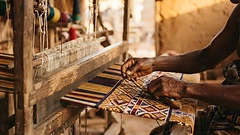
The Loom of Continuity: Weaving Kente into Ghana’s Future
From the historic villages of Bonwire and Adanwomase to the modern classroom, the Kente weaving tradition is evolving through structured apprenticeship and formal education.
- Kente is constructed from strips of silk, cotton, or rayon using horizontal looms.
- Apprenticeship programs in Bonwire and Adanwomase are vital to reviving traditional weaving skills.
- The craft is officially integrated into Ghana's high school and tertiary education systems.
- The Ministry of Tourism, Arts and Culture and the National Folklore Board manage the national inventory of the craft.
- The Ghana Museums and Monuments Board provides workshops in rural areas to support practitioners.
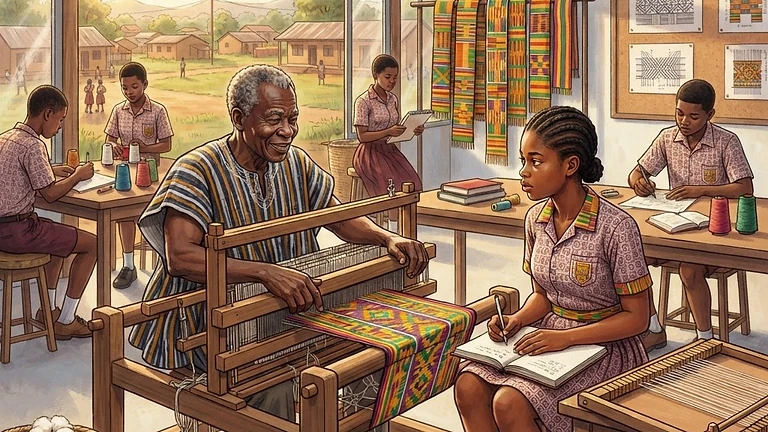
The Loom of Continuity: Weaving Kente into Ghana’s Future: AI-generated editorial illustration for NATION CONTINUITY.
The Living Art of the Loom
In the Ashanti region of Ghana, the rhythmic sound of the horizontal loom remains a heartbeat of local industry. Kente, a textile composed of meticulously woven strips of silk, cotton, or rayon, is more than a cloth; it is a profound testament to the transmission of craftsmanship across generations. While often associated with grand ceremonial occasions, the practice of weaving is sustained through rigorous, community-led apprenticeship models in the historic centers of Bonwire and Adanwomase.
Transmission through Apprenticeship and Education
The survival of the Kente craft relies on a dual approach to knowledge transmission. In the weaving hubs of Bonwire and Adanwomase, cooperatives have been instrumental in reviving structured apprenticeship programs. These programs allow master weavers to pass down the specialized techniques of pattern construction and loom management to a younger cohort, ensuring that the nuances of the craft are preserved in real-time practice. According to reports by Modern Ghana, these localized efforts are vital to the resilience of the art form.

Simultaneously, the Ghanaian state has moved to formalize this knowledge. The Ministry of Tourism, Arts and Culture, in conjunction with the National Folklore Board, oversees the inventory of this intangible cultural heritage. Crucially, the tradition has moved beyond the master-apprentice model to become an integrated component of the formal education system. Today, students at both high school and tertiary levels engage with the techniques and historical significance of Kente, bridging the gap between ancestral knowledge and contemporary pedagogical standards.
Safeguarding and Institutional Support
Efforts to protect Kente are not limited to urban classrooms. The Ghana Museums and Monuments Board (GMMB) conducts targeted workshops in rural towns to broaden the base of skilled practitioners. As noted in the 2024 UNESCO Intergovernmental Committee decision (19.COM 7.B.38), the institutionalization of this craft—ranging from state-managed inventories to school curricula—reflects a proactive stance on safeguarding intangible cultural heritage. By positioning Kente within both the informal cooperative structures and formal institutional frameworks, Ghana ensures that the art form is not treated as a static relic, but as an evolving design language capable of adapting to modern creative industries while honoring its historic roots.
Sources
- UNESCO (Intergovernmental Committee): Decision 19.COM 7.B.38 (2024).
- Modern Ghana: Cultural Heritage at Risk (2024).
UNESCO — Decision of the Intergovernmental Committee: 19.COM 7.B.38; Modern Ghana — Cultural Heritage at Risk: The Fight to Preserve Ghana’s Traditional Arts
The NATION CONTINUITY Editorial Desk produces AI-assisted editorial content — research, drafting and media generated under the publication's source, quality and discovery standards, then reviewed before publication.