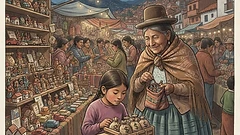
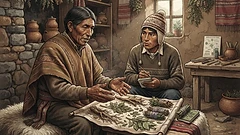
The Living Tapestry of the Carnival of Oruro
A profound exploration of cultural resilience and the syncretic traditions that define the Carnival of Oruro in the Bolivian Andes.
- The Carnival of Oruro features the diablada dance as a form of worship for the Uru god Tiw.
- Andean communities historically masked indigenous beliefs behind Christian icons to ensure their survival.
- UNESCO identifies the festival as a significant site for the transmission of intangible heritage.
- The Carnival functions as a living archive of Andean history and community identity.
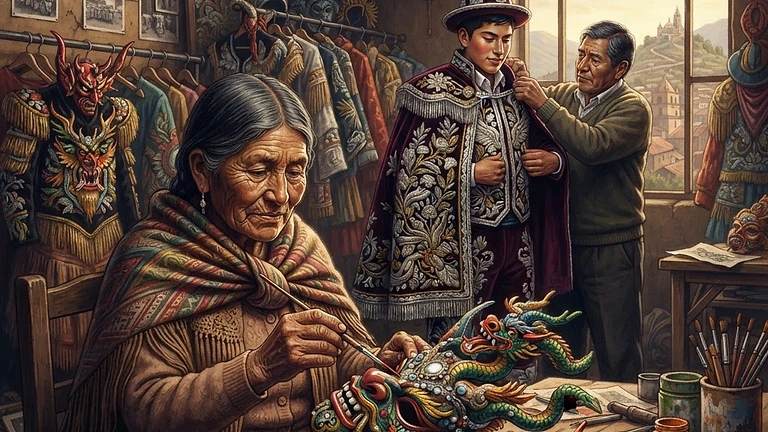
The Living Tapestry of the Carnival of Oruro: AI-generated editorial illustration for NATION CONTINUITY.
A Legacy of Syncretism
In the high-altitude landscapes of Bolivia, the Carnival of Oruro serves as a vital site for the preservation of Andean intangible heritage. Rather than a static relic, the festival is a living, evolving demonstration of how communities transmit knowledge and memory through movement, visual arts, and performance. Central to the celebration is the process of cultural syncretism, a mechanism that has allowed indigenous groups to safeguard their identity against historical attempts at suppression.
The Persistence of Andean Deities
As documented by UNESCO, the Carnival functions as an act of defiance and continuity. During periods of historical colonial influence, Andean practitioners faced severe pressure to abandon their traditional belief systems. To ensure the survival of their ceremonies, communities engaged in a sophisticated form of cultural adaptation, concealing indigenous deities behind Christian iconography. This deliberate layering enabled the Uru people and surrounding communities to maintain their connection to ancestral spirits under the guise of established liturgical practices.
Among the most iconic manifestations of this heritage is the diablada dance. This performance is deeply rooted in the worship of Tiw, the Uru god associated with the earth and the underworld. Through the intricate choreography and elaborate masks worn by participants, the practitioners reassert their cultural presence, ensuring that the stories and spirits of their ancestors remain active within the public sphere.


A Dynamic Cultural Practice
The Carnival of Oruro is not a monolithic event, but a complex, multifaceted tradition that varies in its expression across generations. It functions as an institution of transmission, where the craft of mask-making, the rhythms of traditional music, and the history embedded in dance steps are passed down from elders to younger community members. This transmission process is essential to the resilience of the community, as it ensures that the Carnival remains a contemporary, relevant expression of identity rather than merely a performance for outside observation.
While the festival has gained global recognition, its core remains firmly tied to the local social structures that have supported it for centuries. The ongoing practice serves as a critical archive of Andean history, reflecting both the hardships faced by the Uru people and their extraordinary capacity for creative endurance in a changing world.
Sources
- Carnival of Oruro — UNESCO (International organization, 2025-02-03) https://ich.unesco.org/en/RL/carnival-00003
UNESCO — Carnival of Oruro
The NATION CONTINUITY Editorial Desk produces AI-assisted editorial content — research, drafting and media generated under the publication's source, quality and discovery standards, then reviewed before publication.