Arabic Coffee
Arabic coffee, or qahwa, is an unsweetened, lightly roasted coffee flavoured with cardamom and often saffron, served in small cups as a mark of hospitality across the Arabian Peninsula and the Arab world. The preparation and serving of coffee is a ritual of welcome, generosity and social order, governed by customs of pouring, receiving and refilling. Inscribed on the UNESCO list of intangible heritage, Arabic coffee is both a daily practice and a ceremonial one, binding families, guests and communities. Its continuity shows how a food tradition can carry social meaning as much as taste.
Explanation
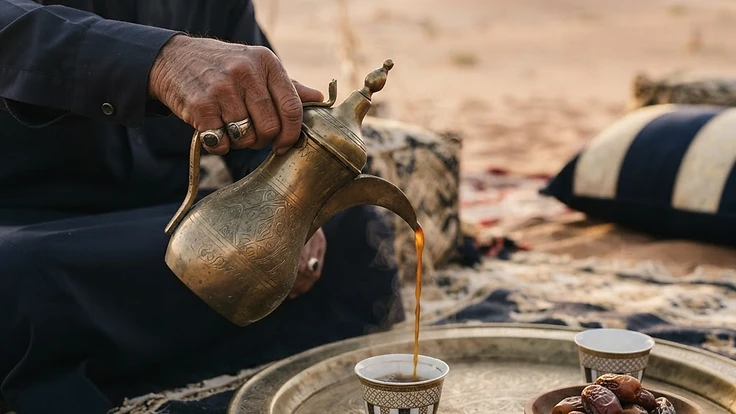
Qahwa is prepared in a dallah pot and served to guests in a defined order, often with dates. The ritual of serving communicates respect and hospitality.
Origin & History
Coffee cultivation and trade spread through the Arabian Peninsula and the wider Arab world from the 15th century onward.
Why It Matters
Arabic coffee is a living emblem of hospitality and social cohesion across the Arab world.
Living Practice Today
Served daily in homes and at ceremonies across the Arabian Peninsula and preserved in cultural institutions.
UNESCO Intangible Cultural Heritage; Saudi Ministry of Culture.