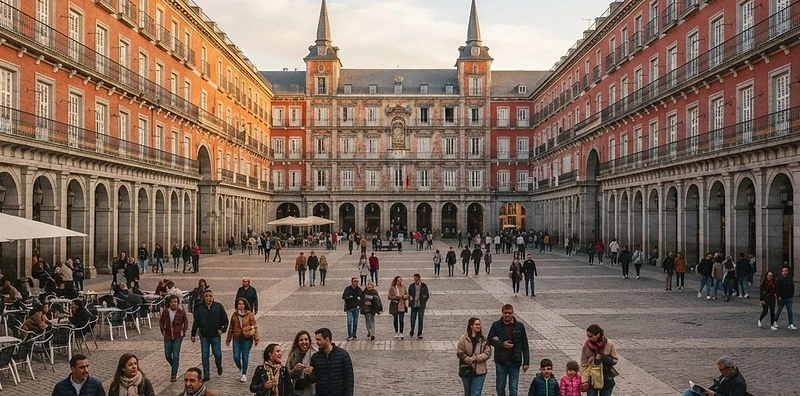
Spain
A state of autonomies where co-official languages and festival cycles carry regional identity and demographic divergence.
Local name: España
Recognised regional or minority languages: Catalan, Galician, Basque, Aranese, Asturian
Source labels and dataset codes are those published by the statistical authority named on each row. Figures are reproduced as retrieved, without interpolation.
Spain, known locally as España, is a sovereign state located in Southwestern Europe on the Iberian Peninsula. The country recognises Spanish as the official language nationwide, while Catalan, Galician, Basque, Aranese, and Asturian hold status as recognised regional or minority languages under the European Charter for Regional or Minority Languages. Madrid serves as the capital and the administrative centre of the nation. Spain is defined by its deep-rooted cultural continuity, evidenced by the preservation of ancient Mediterranean agricultural traditions and complex linguistic diversity. Its demographic landscape is characterised by a high life expectancy and a population that has experienced significant growth driven by international migration. The country maintains a strong institutional commitment to safeguarding its intangible cultural heritage, which serves as a vital link between its historical identity and contemporary social cohesion.
UNESCO Intangible Cultural Heritage: Mediterranean diet · Flamenco · Human towers · Valencia Fallas festivity · Tamboradas drum-playing rituals · Art of dry stone construction, knowledge and techniques · Manual bell ringing · Asturian cider culture

Spain in the Atlas

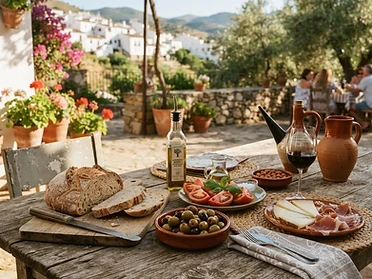

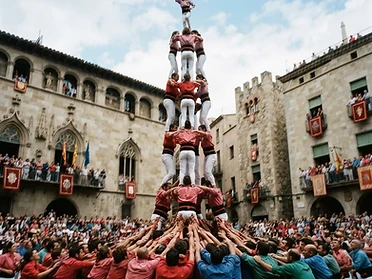
Law 10/2015 for the Safeguarding of Intangible Cultural Heritage
This law establishes the legal framework for the identification, documentation, and protection of intangible cultural heritage in Spain. It mandates the creation of a national inventory and promotes the active participation of communities in the safeguarding of their traditions.
- Instrument
- Law 10/2015
- Year
- 2015
- Scope
- Spain national policy