The Living Heritage of the Vite ad Alberello in Pantelleria
A deep dive into the UNESCO-recognized agricultural practice that allows vines to thrive in the rugged volcanic landscape of Pantelleria.
- The vite ad alberello of Pantelleria was inscribed as UNESCO Intangible Cultural Heritage in 2014.
- The technique involves growing vines in hollowed-out basins to protect them from strong winds.
- The practice is a specific adaptation to the volcanic soil and climate of Pantelleria.
- Knowledge of the practice is passed down through generations of local farmers.
- The tradition helps maintain the cultural identity and environmental integrity of the island.
- UNESCO recognizes this practice as a living heritage that continues to evolve.
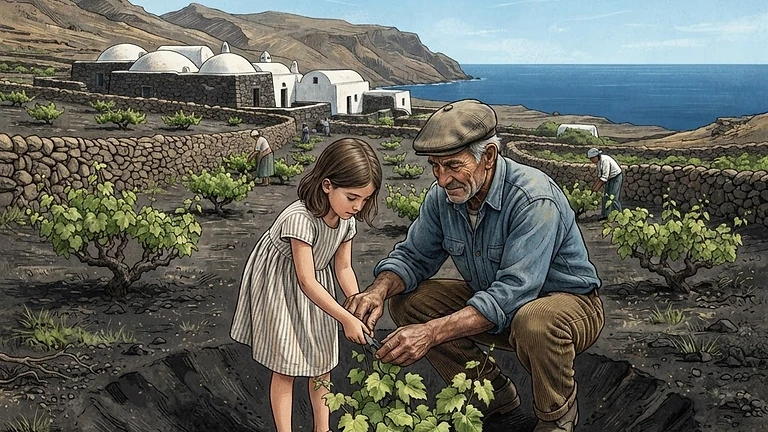
The Living Heritage of the Vite ad Alberello in Pantelleria: AI-generated editorial illustration for NATION CONTINUITY.
Adapting to the Volcanic Landscape
In the heart of the Mediterranean, the island of Pantelleria has developed a distinctive viticultural tradition known as the vite ad alberello, or head-trained bush vine. This practice, inscribed by UNESCO in 2014 as an element of Intangible Cultural Heritage, is far more than a farming technique; it is a specialized adaptation to the island's extreme environmental conditions, characterized by strong winds, intense heat, and limited water availability [1]. By cultivating the vines in small, hollowed-out basins, local farmers protect the plants from the harsh Pantescan winds and maximize water retention in the nutrient-rich volcanic soil [2].
Transmission of Knowledge
The mastery of the vite ad alberello is deeply rooted in the island’s social fabric, where knowledge is transmitted from one generation of farmers to the next. The technique involves delicate pruning and a specific way of training the vine to remain low to the ground. According to records from the Ministry of Foreign Affairs and International Cooperation, this practice is emblematic of the historical relationship between the local population and their unique environment [2]. It is not a static tradition but a living practice that continues to evolve as farmers balance historical methods with contemporary needs.


Preservation and Global Recognition
The 2014 UNESCO inscription officially recognized the cultural significance of these methods, highlighting the role of the Pantescan community in maintaining the landscape's integrity [1]. Beyond the physical cultivation of grapes, the practice sustains an oral tradition and a collective memory that defines the identity of the island's farmers. As stated by UNESCO, the recognition serves as a framework to support the safeguarding of this heritage for future generations, ensuring that the intimate link between human labor and the land remains intact [1].
Sources
- [1] UNESCO Intangible Cultural Heritage, Traditional agricultural practice of cultivating the ‘vite ad alberello’ of Pantelleria, 2014. https://ich.unesco.org/en/state/italy-IT?cp=IT&topic=en-state
- [2] Ministry of Foreign Affairs and International Cooperation (MAECI), Italy and UNESCO. https://www.esteri.it/en/temi/diplomazia_culturale/cooperculturale/litalia-e-lunesco
UNESCO Intangible Cultural Heritage — Italy - UNESCO Intangible Cultural Heritage; Ministry of Foreign Affairs and International Cooperation — Italy and UNESCO
The NATION CONTINUITY Editorial Desk produces AI-assisted editorial content — research, drafting and media generated under the publication's source, quality and discovery standards, then reviewed before publication.