Rhythms of Resilience: How Rwandan Dance Evolves
Modern Rwandan performance troupes are blending ancestral movements with global influences to navigate identity and rebuild social bonds.
- Rwandan dance troupes integrate traditional forms with novel, transcultural elements.
- Dance performances in Rwanda provide a mechanism to address post-conflict tensions and pain.
- Performance is used as a tool for community cohesion and identity navigation in post-genocide Rwanda.
- Cultural evolution in Rwanda involves layering historical practice with modern artistic innovation.
- The European Commission (CORDIS) identified dance as a medium for social repair in Rwanda.
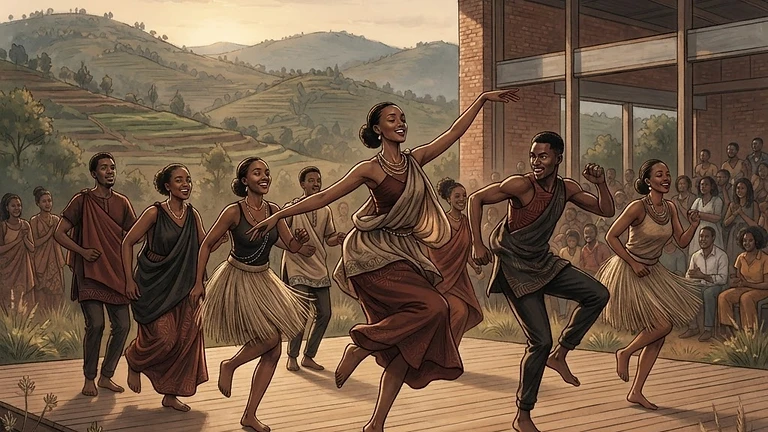
Rhythms of Resilience: How Rwandan Dance Evolves: AI-generated editorial illustration for NATION CONTINUITY.
The Living Stage of Modern Rwanda
In the hills of Rwanda, dance has transcended its role as mere entertainment to become a vital vessel for societal recalibration. Contemporary dance troupes across the country are actively engaging in the fusion of traditional performance forms with modern, transcultural elements. This movement is not an attempt to freeze the past in amber, but rather a dynamic process of layering history onto the present to help manage the complex layers of post-conflict identity.
Bridging Memory and Performance
According to research supported by the European Commission (CORDIS), these performances serve as a critical mechanism for social repair. By integrating traditional techniques with novel, contemporary artistic expressions, dancers create spaces that facilitate communication despite the profound, often unspeakable tensions and historical pains that remain embedded in the communal memory.

The practice of blending ancestral movement with modern innovation serves as a resilient response to historical trauma, allowing communities to process shared history while embracing a forward-looking identity.
Evolving Identities
These troupes do not represent a monolithic national expression; instead, they function as diverse laboratories for cultural negotiation. The integration of transcultural elements—such as modern music production techniques or contemporary global stagecraft—allows performers to articulate a Rwanda that is connected to its heritage while simultaneously participating in a globalized arts dialogue. This safeguarding of immaterial heritage happens not through isolation, but through active, evolving participation in the cultural sphere.
Sources
- European Commission (CORDIS), "Dance Performances in Post-Genocide Rwanda: Continuity, Creativity and Identity," 2014-11-07. https://cordis.europa.eu/project/id/621919/reporting
European Commission (CORDIS) — Dance Performances in Post-Genocide Rwanda: Continuity, Creativity and Identity
The NATION CONTINUITY Editorial Desk produces AI-assisted editorial content — research, drafting and media generated under the publication's source, quality and discovery standards, then reviewed before publication.