Echoes of the Altiplano: Cultural Persistence in Puno
The Festivity of the Virgen de la Candelaria serves as a bridge for the Puno community, linking generations and diasporas through shared artistic traditions.
- The Festivity of the Virgen de la Candelaria is inscribed as UNESCO Intangible Cultural Heritage.
- Three regional federations oversee the transmission of traditional skills and performance knowledge.
- The festivity acts as a mechanism for cultural continuity by drawing returning emigrants into community life.
- Craft workshops and musical rehearsals serve as the primary venues for intergenerational skill sharing.
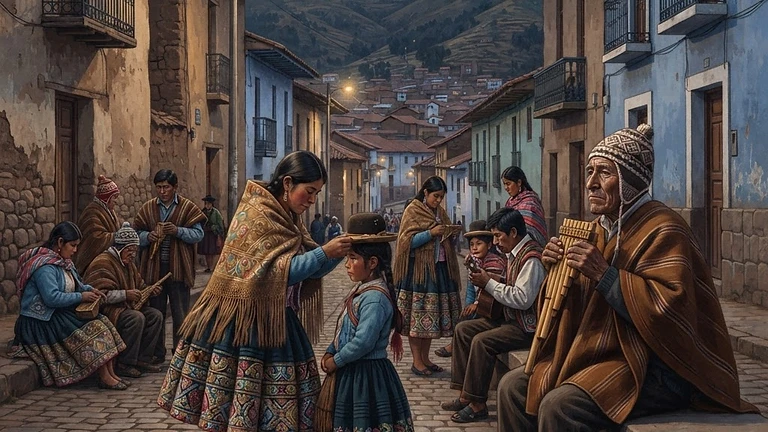
Echoes of the Altiplano: Cultural Persistence in Puno: AI-generated editorial illustration for NATION CONTINUITY.
The Living Heritage of the Altiplano
In the high-altitude city of Puno, the Festivity of the Virgen de la Candelaria stands as a primary engine for cultural continuity. As documented by UNESCO, this annual event is not merely a scheduled occasion but a complex web of social interaction that preserves the artistic expressions of the region. Through the integration of music, dance, and elaborate craftsmanship, the local population maintains a bridge between historical practices and the demands of modern life.
The Role of Migration and Community
A distinctive feature of the festivity is the role of the diaspora. Emigrants who have relocated to larger urban centers or abroad return to Puno annually to participate in the performances, highlighting how migration acts as a conduit for cultural maintenance rather than a rupture. By re-engaging with their home city, these individuals ensure that traditional choreographies and musical styles continue to evolve while remaining rooted in regional history.

Institutional Safeguarding
The transmission of knowledge is structured through the cooperation of three regional federations. These institutions manage the technical aspects of the celebration, ranging from the intricate creation of masks to the teaching of dance steps to younger generations. By organizing rehearsals and craft workshops throughout the year, these federations provide the necessary framework for skills to pass from elder practitioners to youth. This institutional support transforms the festivity from a transitory event into a year-long cycle of learning and intergenerational exchange. While the event incorporates religious elements, it is fundamentally a cultural exercise in safeguarding a living identity in a shifting global context.
Sources
- Festivity of Virgen de la Candelaria of Puno, UNESCO Intangible Cultural Heritage, https://ich.unesco.org/en/RL/festivity-of-virgen-de-la-candelaria-of-puno-00956
UNESCO Intangible Cultural Heritage — Festivity of Virgen de la Candelaria of Puno
The NATION CONTINUITY Editorial Desk produces AI-assisted editorial content — research, drafting and media generated under the publication's source, quality and discovery standards, then reviewed before publication.