Weaving Clay and Language: Revitalizing Checca Pupuja Ceramics
A collaborative initiative in Puno is embedding ancestral ceramic techniques into formal education through bilingual curricula.
- UNESCO and the Ministry of Culture are integrating Checca Pupuja ceramic traditions into Puno's school curricula.
- Bilingual pedagogical guides in Quechua and Spanish were created to facilitate knowledge transmission.
- The project is funded by the International Assistance Fund of UNESCO’s 2003 Convention.
- The book 'Cerámica Tradicional de Checca Pupuja' was published as part of the Ruraq Maki series.
- The initiative emphasizes sustainable local capacity building and intergenerational knowledge exchange.
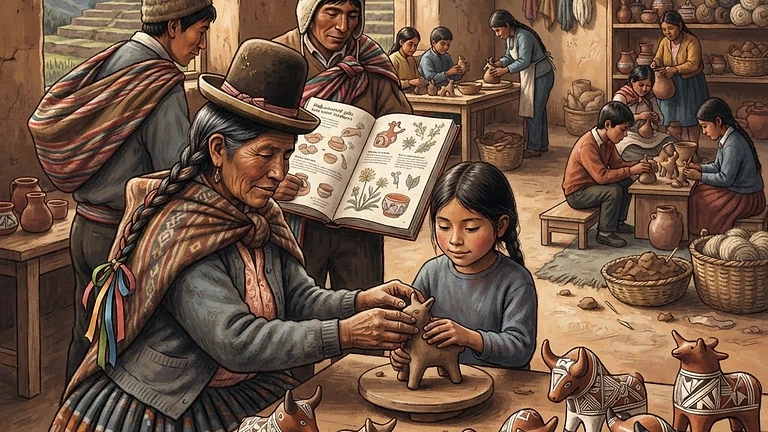
Weaving Clay and Language: Revitalizing Checca Pupuja Ceramics: AI-generated editorial illustration for NATION CONTINUITY.
The Living Craft of Checca Pupuja
In the high-altitude landscapes of Puno, the peasant community of Checca Pupuja is actively shaping the future of its material heritage. The tradition of ceramic production, long a hallmark of local identity and social cohesion, is moving from the household workshop into the formal classroom. This transition is marked by a collaborative initiative between the Ministry of Culture and UNESCO, which aims to ensure that the techniques, materials, and cultural significances inherent in the craft are not only preserved but actively practiced by younger generations.
Bridging Generations Through Education
At the core of this project is the integration of traditional ceramic knowledge into local school curricula. To facilitate this transmission, the initiative has developed specialized bilingual pedagogical guides in both Quechua and Spanish. According to the UNESCO report dated January 15, 2026, these materials are designed to provide students with a structured understanding of the artistic and technical processes involved in Checca Pupuja ceramics, turning local history into a dynamic subject of study.

This pedagogical approach is bolstered by the 'Cerámica Tradicional de Checca Pupuja' book, published as part of the Ruraq Maki series. As noted by the Ministry of Culture on December 19, 2025, this resource supports the broader goal of fostering sustainable mechanisms for local capacity building. By involving young people, local educators, and the wider community in a participatory process, the initiative seeks to move beyond static museum preservation, treating the ceramic tradition as a living, evolving practice.
Institutional Support and Future Prospects
The project is supported by the International Assistance Fund of the 2003 Convention for the Safeguarding of the Intangible Cultural Heritage. By formalizing the transfer of knowledge, the community and the involved institutions aim to protect the artisanal techniques from the risks of cultural erosion. While the project establishes a robust framework for transmission, the success of the endeavor depends on the ongoing participation of local artisans who serve as the primary conduits of this ancestral knowledge. Through this sustained effort, the community of Checca Pupuja continues to define how its unique craft responds to contemporary educational needs.
Sources
- UNESCO: UNESCO Peru and the Ministry of Culture promote the integration of the ceramic knowledge of Checca Pupuja in Puno's schools (2026).
- Ministerio de Cultura del Perú: UNESCO Perú y el Ministerio de Cultura lideraron proceso participativo con jóvenes, escuela y la comunidad (2025).
UNESCO — UNESCO Peru and the Ministry of Culture promote the integration of the ceramic knowledge of Checca Pupuja in Puno's schools; Ministerio de Cultura del Perú — UNESCO Perú y el Ministerio de Cultura lideraron proceso participativo con jóvenes, escuela y la comunidad
The NATION CONTINUITY Editorial Desk produces AI-assisted editorial content — research, drafting and media generated under the publication's source, quality and discovery standards, then reviewed before publication.