Firing the Future: Checca Pupuja Ceramic Heritage Enters the Classroom
A new initiative in Puno merges ancestral pottery techniques with formal education through a bilingual pedagogical toolkit.
- Checca Pupuja ceramic practices have been designated as National Cultural Heritage in Peru.
- A bilingual book in Castellano and Quechua Collao has been developed to support local education.
- The initiative is part of the Ruraq Maki collection, supported by the Ministry of Culture.
- The program integrates ancestral ceramic techniques directly into the school curriculum in Puno.
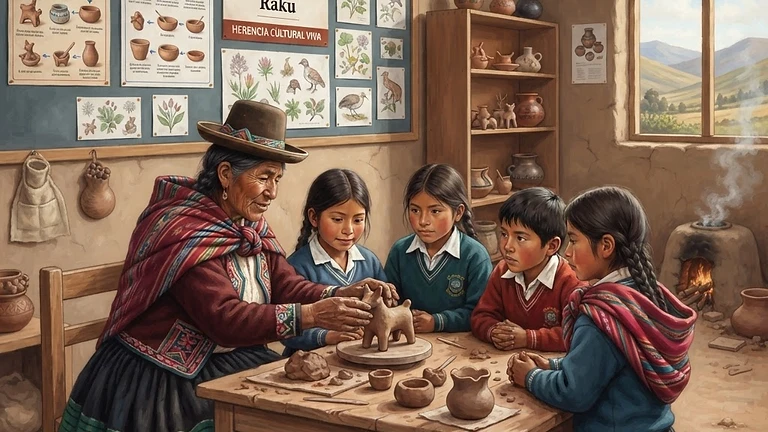
Firing the Future: Checca Pupuja Ceramic Heritage Enters the Classroom: AI-generated editorial illustration for NATION CONTINUITY.
A Living Tradition in Transition
In the high-altitude landscapes of Puno, the community of Checca Pupuja is transforming how ancestral knowledge is passed to younger generations. Rather than relying solely on informal apprenticeship, the community, in collaboration with the Peruvian Ministry of Culture and UNESCO, has launched a formal pedagogical initiative to teach the intricacies of their renowned ceramic tradition within local schools. This effort marks a deliberate shift toward institutionalizing cultural memory through structured, bilingual educational guides.
Bridging Languages and Techniques
The core of this program is the publication of a bilingual book—titled Cerámica Tradicional de Checca Pupuja / Checca Pupuja Unaymantapacha t’uru llamk’aynin—which serves as the primary educational resource. By presenting technical knowledge in both Castellano and Quechua Collao, the initiative ensures that the linguistic context of the craft remains intact for students. This documentation project, part of the Ministry of Culture’s Ruraq Maki collection, acts as a bridge between the oral traditions held by elders and the classroom environment, where the next generation can study the evolution of their material culture.

Integrating Heritage into Formal Education
The integration of these techniques into the school curriculum is a significant milestone for the preservation of Checca Pupuja’s identity. UNESCO Peru notes that this project is not merely an archival exercise but a functional strategy to ensure that ancestral methods remain viable and relevant. By embedding the study of local ceramics into the daily life of students, the community addresses the need for sustainable cultural transmission in an increasingly globalized educational landscape. As noted by the Ministry of Culture, the designation of these ceramics as National Cultural Heritage provides the institutional weight necessary to support these school-based programs, ensuring that the practice evolves as a vibrant, living asset rather than a static relic of the past.
Sources
- UNESCO Peru (2026): UNESCO Peru and the Ministry of Culture promote the integration of the ceramic knowledge of Checca Pupuja in Puno’s schools.
- Ministerio de Cultura del Perú (2025): Cerámica Tradicional de Checca Pupuja / Checca Pupuja Unaymantapacha t’uru llamk’aynin.
UNESCO — UNESCO Peru and the Ministry of Culture promote the integration of the ceramic knowledge of Checca Pupuja in Puno’s schools; Ministerio de Cultura del Perú — Cerámica Tradicional de Checca Pupuja / Checca Pupuja Unaymantapacha t’uru llamk’aynin
The NATION CONTINUITY Editorial Desk produces AI-assisted editorial content — research, drafting and media generated under the publication's source, quality and discovery standards, then reviewed before publication.