Preserving Ancestral Clay: Checca Pupuja Ceramic Arts Enter Puno Classrooms
A new educational initiative in Puno is bridging the gap between master artisans and students, ensuring the future of Checca Pupuja’s distinct ceramic heritage.
- The community of Checca Pupuja is collaborating with the Ministry of Culture and UNESCO to teach ceramic crafts in local schools.
- The initiative aims to safeguard ancestral techniques by connecting youth with master artisans.
- The Peruvian Ministry of Culture formally prioritized the management of cultural heritage in its 2024 reporting.
- The program seeks to integrate intangible heritage into the regional school curriculum.
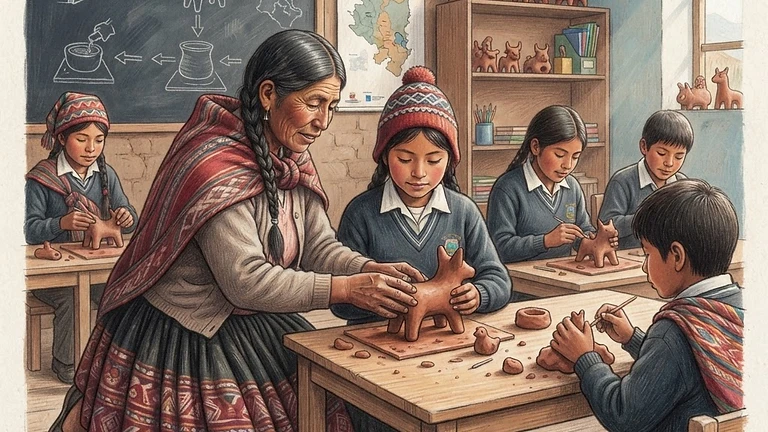
Preserving Ancestral Clay: Checca Pupuja Ceramic Arts Enter Puno Classrooms: AI-generated editorial illustration for NATION CONTINUITY.
A Living Tradition in the Classroom
In the high-altitude landscapes of Puno, the community of Checca Pupuja is transforming how cultural knowledge is transmitted. Rather than confining ceramic techniques to household apprenticeship, a new collaborative initiative involves local schools, master artisans, and government bodies to bring ancestral craftsmanship into the classroom. According to reporting from UNESCO, this partnership with the Peruvian Ministry of Culture seeks to formalize the instruction of traditional pottery, ensuring that the unique styles and methods defined by the community remain a vital part of the local identity for younger generations.
Institutional Support and Cultural Safeguarding
The project aligns with the broader institutional framework established by the Peruvian Ministry of Culture, which emphasized the prioritization of cultural sector management and the safeguarding of immaterial heritage in its 2024 annual report. By embedding these practices into school curricula, the Ministry and its partners aim to create a structured path for students to learn from established practitioners. This approach moves away from viewing crafts as static objects, instead framing them as active, evolving skills that require community involvement to survive.


The Dynamics of Transmission
While the initiative provides a public platform for the transmission of heritage, it also highlights the complexities of cultural education. The integration process is being carefully developed to ensure that the instruction respects the nuances of Checca Pupuja’s techniques, which have historically been passed down through familial and community-based systems. By bridging formal education with traditional craftsmanship, the project creates a space where diverse forms of knowledge—institutional and ancestral—can coexist. This effort illustrates how regional communities are actively influencing policy to prevent the loss of specialized knowledge in an increasingly globalized educational landscape.
Sources
- UNESCO (2026): UNESCO Peru and the Ministry of Culture promote the integration of the ceramic knowledge of Checca Pupuja in Puno's schools.
- Ministerio de Cultura del Perú (2025): Memoria Anual 2024.
UNESCO — UNESCO Peru and the Ministry of Culture promote the integration of the ceramic knowledge of Checca Pupuja in Puno's schools; Ministerio de Cultura del Perú — Memoria Anual 2024
The NATION CONTINUITY Editorial Desk produces AI-assisted editorial content — research, drafting and media generated under the publication's source, quality and discovery standards, then reviewed before publication.