The Carnaval de Negros y Blancos: A Ritual of Equality in San Juan de Pasto
In the heart of the Colombian Andes, the Carnaval de Negros y Blancos transforms city streets into a living canvas where social cohesion is negotiated through shared color and tradition.
- The Carnaval de Negros y Blancos is recognized by UNESCO as an essential element of intangible cultural heritage.
- The festival traces its origins to a mix of Andean and Hispanic cultural traditions.
- Participants use black and white cosmetics to symbolize social equality during the festivities.
- The carnival serves as a mechanism for social cohesion and the preservation of regional collective memory.
- The celebration acts as a dynamic, evolving space for community identity rather than a fixed historical relic.
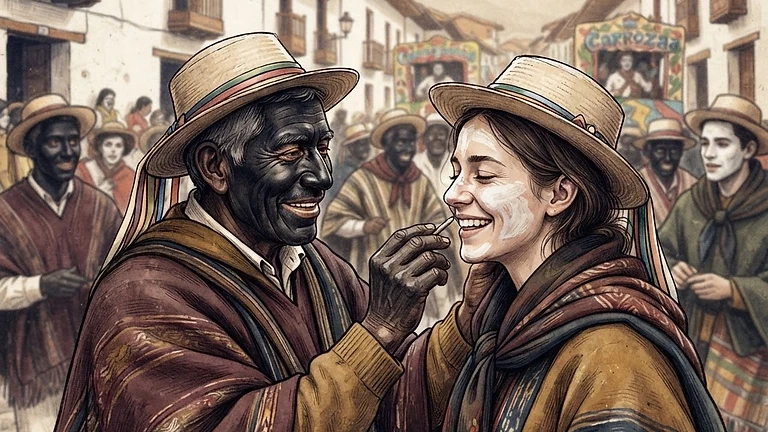
The Carnaval de Negros y Blancos: A Ritual of Equality in San Juan de Pasto: AI-generated editorial illustration for NATION CONTINUITY.
A Legacy of Integration
In the high-altitude city of San Juan de Pasto, the Carnaval de Negros y Blancos serves as a vital forum for social cohesion and collective memory. Rather than a static tradition, the festival functions as a dynamic space where the community negotiates its identity through a sequence of ritualized performances. According to UNESCO, the festival's historical roots draw from an amalgamation of Andean and Hispanic traditions, reflecting the layered history of the region's inhabitants.
The Symbolism of Cosmetics
The core of the festival lies in its symbolic use of cosmetics, which act as a leveling agent. During the designated days of the carnival, participants apply black and white makeup to their faces, a practice intended to signify social equality. By masking individual markers of class, ethnicity, or social standing, the participants create a shared visual language that temporarily erases structural differences. This ritualized transformation allows for a communal experience where all participants, regardless of their background, occupy the same symbolic space.

Preserving Cultural Memory
As a protected form of intangible heritage, the carnival remains a pillar for safeguarding the regional memory of San Juan de Pasto. The celebration is not merely a performance but an active transmission of cultural practices across generations. Through dance, music, and the collaborative preparation of elaborate floats and costumes, local communities maintain a living archive of their collective history. UNESCO highlights that the festival remains deeply significant to the local population, serving as a social foundation that reinforces solidarity and common purpose within the community.
Sources
- Carnaval de Negros y Blancos — UNESCO (UNESCO Intangible Cultural Heritage): https://ich.unesco.org/en/RL/carnaval-de-negros-y-blancos-00287
UNESCO — Carnaval de Negros y Blancos
The NATION CONTINUITY Editorial Desk produces AI-assisted editorial content — research, drafting and media generated under the publication's source, quality and discovery standards, then reviewed before publication.