Bobbin Lacemaking in Slovenia
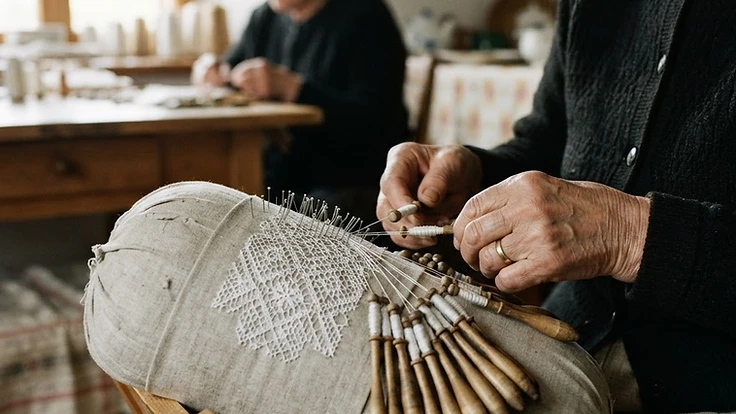
Bobbin lacemaking is a traditional handicraft skill involving the intricate crossing and twisting of threads wound on wooden bobbins. It is a recognized cultural practice that utilizes specific local patterns and techniques.
Explanation
This craft requires high levels of dexterity and patience, with practitioners creating delicate lace designs that are often used for clothing and home decoration. The knowledge is transmitted primarily through family lines and specialized lacemaking schools, particularly in regions like Idrija. Each pattern often carries a local name, reflecting the specific geographic and cultural identity of the community where it was produced. The craft is a testament to the historical importance of textile arts in Slovenian social life.
Origin & History
The craft has been documented in Slovenia since the 17th century, initially introduced by mining communities and later spreading to rural areas. It became a significant source of supplementary income for families over the centuries.
Why It Matters
It preserves a unique aesthetic heritage and demonstrates the historical resilience of local craft economies. The practice maintains a tangible connection to the artistic traditions of past generations.
Living Practice Today
Lacemaking is currently practiced by numerous associations and individuals who participate in festivals and exhibitions. It is supported by formal education and remains a symbol of Slovenian cultural identity.
UNESCO Intangible Cultural Heritage List; Idrija Lace School