Orthodox Icon Tradition
The Orthodox icon tradition is the practice of painting sacred images according to prescribed theological and artistic rules, central to Eastern Orthodox Christian worship. Icons are not merely decorative; they are understood as windows to the sacred and are venerated in church and home. The tradition connects theology, craft, music and architecture across the Orthodox world, from Greece and the Balkans to Russia. Its continuity depends on monastic and lay workshops that transmit techniques of egg tempera, gilding and composition, showing how a religious art form can sustain a dense cultural ecosystem.

Explanation
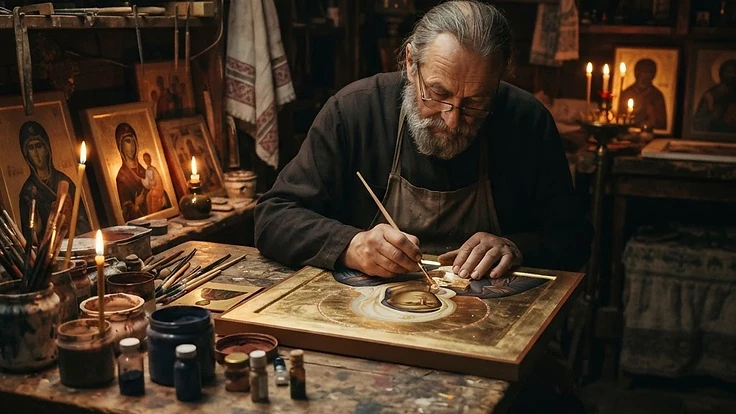
Icons are painted in egg tempera on wood panels following prescribed compositions and theological rules, and are venerated in churches and homes.
Origin & History
The icon tradition developed in the early Eastern Christian church and was refined over centuries in Byzantine and later Slavic contexts.
Why It Matters
Icons show how a religious art form can sustain theology, craft and community across centuries.
Living Practice Today
Icon painting is taught in workshops and monasteries and remains central to Orthodox worship.
Moscow Patriarchate cultural department; Mount Athos archives.