Feast of the Holy Forty Martyrs in Štip
The Feast of the Holy Forty Martyrs is an annual ritual held in the city of Štip to commemorate the Christian martyrs. It involves communal gatherings and specific traditional food preparations.
Explanation
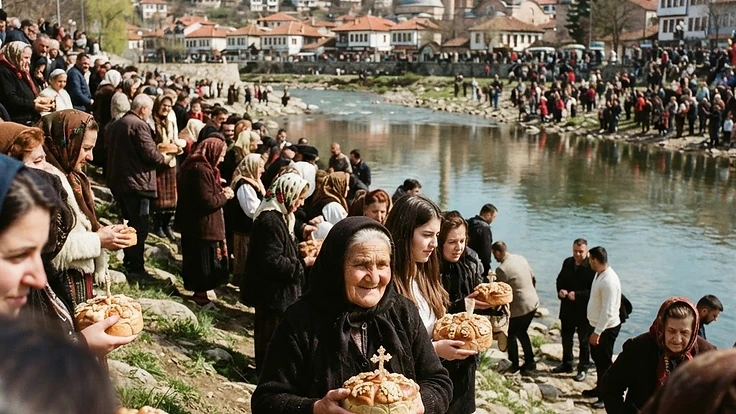
The ritual centers on the gathering of citizens at the city's riverbanks and the preparation of forty small loaves of bread, known as martinki. Participants engage in social activities that reinforce neighborhood bonds and collective memory. The event is deeply embedded in the local calendar and involves both religious and secular community participation. It is a significant marker of the city's social and cultural identity.
Origin & History
The tradition dates back to historical religious observances in the Štip region. It has evolved into a major community event that defines the city's annual cycle.
Why It Matters
The feast fosters social cohesion and maintains the link between historical religious traditions and contemporary community life. It is a key example of how intangible heritage is integrated into urban social structures.
Living Practice Today
The feast is celebrated annually by the residents of Štip with widespread participation. It is supported by local institutions and cultural organizations as a vital part of the city's heritage.
UNESCO Intangible Cultural Heritage List; Cultural Heritage Protection Office